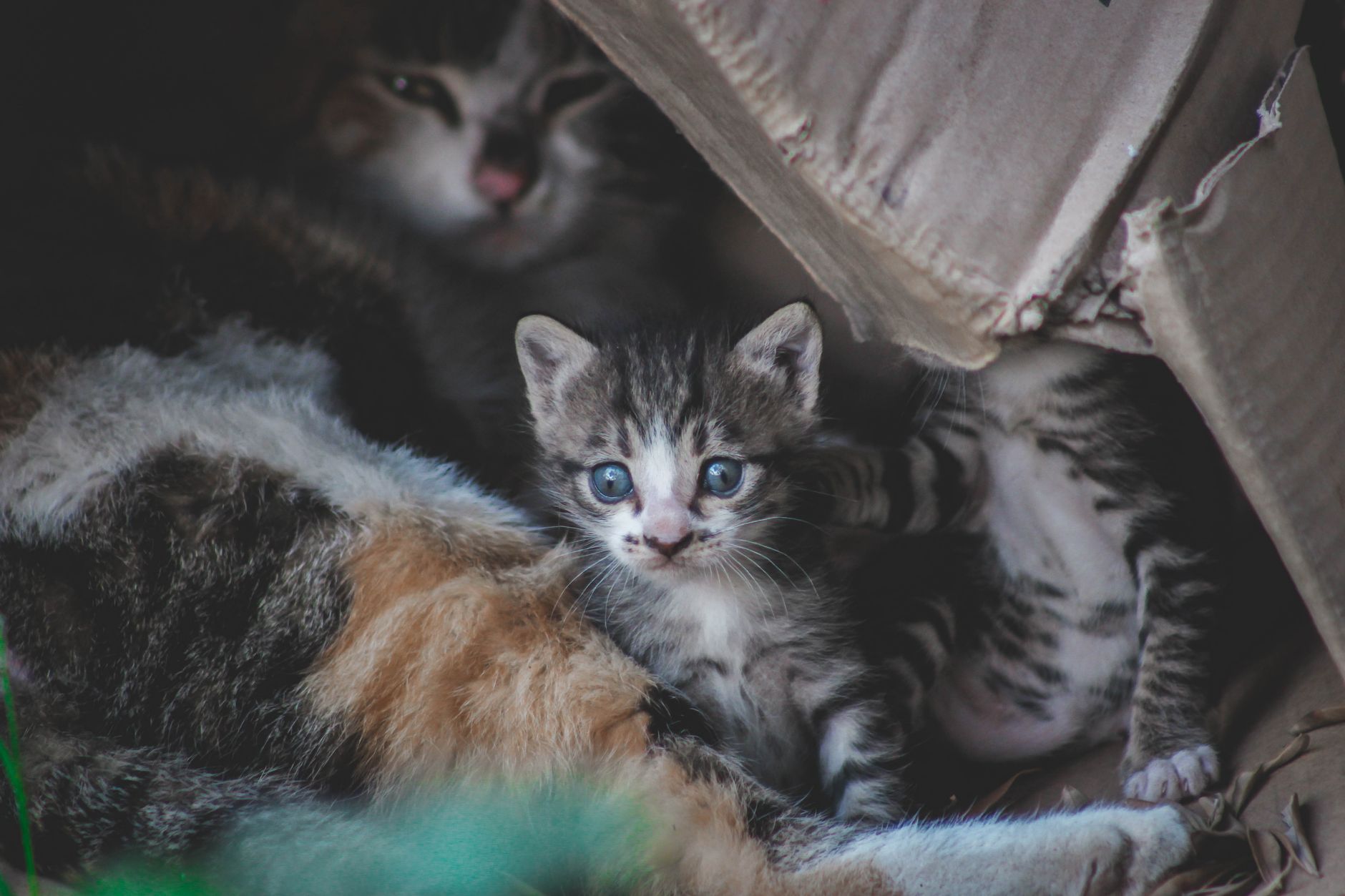
Hello, it’s Sachat. You’ve just welcomed a tiny ball of fluff into the home and you’re staring at your rug in dread, wondering whether it will survive the coming weeks? Take a breath. Teaching a kitten to use the litter tray is honestly the easiest thing you’ll ever have to show them. We cats are born with it in our paws. Your job is simply not to sabotage our instinct. And believe me, I’ve watched humans pull off the remarkable feat of overcomplicating the whole thing. Right, let me show you how to get it spot on the first time.
Why litter training a kitten is (almost) automatic
Good news straight away: a kitten doesn’t really need to be “taught” to use the tray the way you train a dog. At around 3 to 4 weeks, we naturally start scratching and burying. It’s instinctive, mum has already shown us the basics. When a kitten arrives at your home around 8 to 12 weeks, they already know how to do it. Your real job is to give them the right setup in the right spot.
So if your kitten has accidents, in 90% of cases they aren’t the problem: it’s the tray, the litter, the location, or some sort of stress. Keep that in mind, it’ll save you from getting wound up over nothing. A clean cat is simply a cat who’s been left in peace with a decent loo corner.
The litter tray: size, type and number
First human reflex to correct: buying a tiny tray “because it’s just a kitten”. Mistake. Your kitten will grow fast, and a tray that’s too small will put them off. Go big from the start, a tray where the adult they’ll become can turn around without touching the sides.
Open tray or covered tray?
For a kitten, I recommend an open tray to begin with: they can see where they’re going, they get in easily, and you can keep an eye on things. Covered trays trap odours inside (unpleasant for my ultra-sensitive nose) and can intimidate a little one. If you fancy something stylish and practical, the Pidan litter tray – Amazon does the job with an accessible entrance and a look that won’t ruin your living room.
How many trays?
Our golden rule: one tray per cat, plus one spare. Just one kitten? Two trays if your home has more than one floor or is large. We hate queuing for the loo, and a kitten who can’t find their tray in time will go elsewhere. Makes sense, doesn’t it?
The litter: which one to choose for a kitten
Your choice of litter is 50% of your success. We have very clear preferences, and a poor substrate can scupper the whole thing. For a kitten, go for a fine litter, soft under the paw pads, and above all unscented. Chemical fragrances put us off, even if the human finds them “fresh”.
An important word of warning: for a very young kitten (under 3 months), avoid tightly clumping mineral litters if they tend to taste everything, because if swallowed it can cause trouble. A Cat’s Best plant-based litter – Amazon is an excellent compromise: clumping, natural, low in dust and compostable. If you’re after rock-solid odour control over the long term, the Tigerino mineral litter – Amazon is formidable once your cat is a bit bigger. And if you live in a small space and dust bothers you, a recycled paper litter – Amazon remains a soft, lightweight option.
Whatever you choose, keep about 4 to 5 cm of litter in the tray. Enough for us to scratch with pleasure, not so much that it spills everywhere.
Location: the key everyone gets wrong
You can have the perfect tray and the best litter in the world, but if you put it in the wrong place, it’s game over. Here’s what we cats expect:
- A quiet, peaceful corner. Not next to the washing machine roaring away, not in a busy hallway. We like privacy, just like you.
- Far from the food and water bowls. Would you eat next to your loo? No. Neither would we.
- Always accessible. No closed door between the kitten and their tray, especially at night.
- A stable spot. Once they’ve adopted their corner, don’t move it every three days. Routine reassures us.
When your kitten arrives, show them the tray within the first hour. Gently pop them in it after meals and on waking. They’ll catch on quickly. No need for a big speech, the smell and texture do the work.
Handling accidents without panicking
An accident will probably happen. Above all, never shout and never rub their nose in it. That old method isn’t just cruel, it’s completely counterproductive: it teaches us to fear you, not to use the tray. The result is that we hide to go, which is worse.
The right reaction
Clean up without drama, but clean up WELL. The trap is lingering odour: if it still smells of wee, we’ll come back to the same spot, it’s automatic. Never use an ammonia-based product (urine contains it, so it attracts us). To truly neutralise the smell, an enzymatic product is ideal. A sprinkle of diatomaceous earth – Amazon can also help absorb and dry out a fresh patch before cleaning.
When to see the vet?
If your kitten, clean up to now, suddenly starts going everywhere, straining without producing anything, or miaowing while urinating, it’s not a tantrum: head to the vet. A urinary infection or cystitis can happen even in young ones, and it clears up very well when caught early.
Upkeep: cleanliness is your job too
Here’s the best-kept secret: we refuse to use a dirty tray. Picture a public loo that’s never cleaned, how long would you last? Same for us.
- Scoop out the soiled bits once or twice a day with a suitable litter scoop – Amazon. It’s the one habit that makes all the difference to your kitten’s cleanliness.
- Empty and wash the tray completely about once a week, with hot water and mild soap, never scented bleach.
- Top up with fresh litter regularly to keep a decent depth.
A clean tray means 80% of litter problems avoided in advance. If you take just one thing from this article, take that one.
FAQ
At what age is a kitten litter trained?
Most kittens can use a litter tray from 4 weeks, guided by their mother. By the time they arrive in their new home around 8 to 12 weeks, they’re already trained. If your kitten isn’t, it’s nearly always a matter of the setup (tray, litter, location) rather than a delay in the animal.
My kitten goes next to the tray, what do I do?
Check the basics first: is the tray big enough, clean, in a quiet corner and far from the bowls? Switch to a fine, unscented litter if needed. Clean accidents with an enzymatic product to erase the smell. If everything is spotless and it persists, see a vet to rule out a health issue.
Do I need a special kitten litter?
Not necessarily, but go for a soft, fine, fragrance-free litter. For very young ones who chew on everything, avoid tightly clumping mineral litters in favour of a plant-based or paper litter, which is safer if accidentally swallowed.
How often should I clean the litter tray?
Scoop out the waste at least once a day, ideally twice. A full clean of the tray once a week is enough. A cat is very sensitive to the cleanliness of their loo corner: a neglected tray is the number one cause of accidents.
Purrs, Sachat 🐾