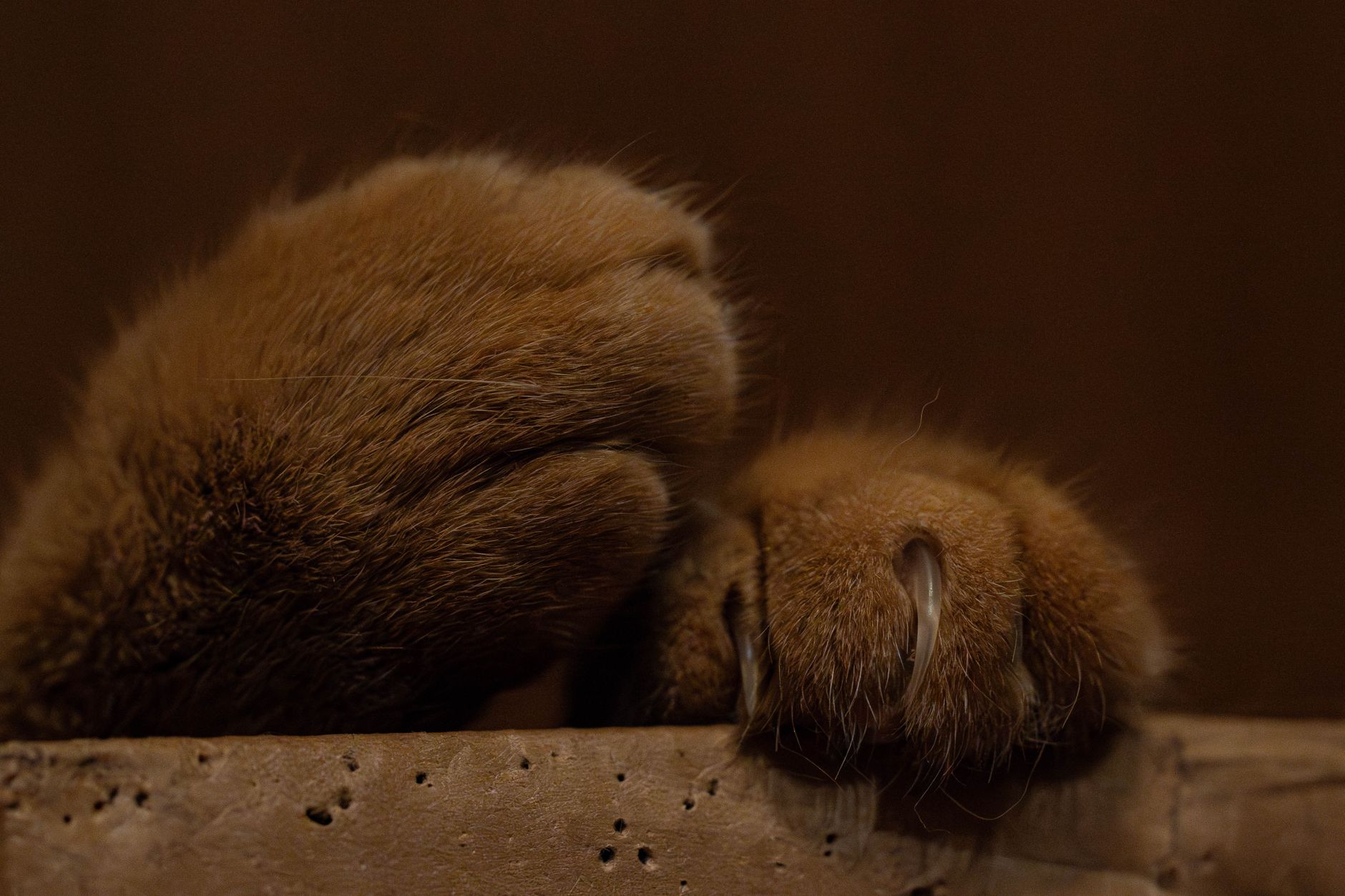
Let me be straight with you: I am not a fan of manicure day. Nobody touches my little daggers without my say so. And yet, when my human gets it right, the whole thing is over in two minutes with not a single hiss. The truth is that trimming a cat’s claws is not a trial of strength. It is a question of the right tool, the right move, and above all the right moment. Let me show you how we stay friends, you and your cat.
Do you really have to trim a cat’s claws?
Yes, most of the time, but not always. A cat who goes out and climbs wears his claws down on his own. An indoor cat, an older cat or a kitten usually needs a hand.
Overgrown claws are not just about a shredded sofa. They catch on everything, they split, and in a senior cat they can curl right round and grow back into the pad. That hurts, and it gets infected. So keeping an eye on claws is proper care, exactly like regular grooming.
How often should you trim a cat’s claws?
On average, every 3 to 4 weeks. But forget the calendar and look at the claws instead. The right interval depends on the cat:
- Indoor cat: every 2 to 4 weeks, because he wears them down very little.
- Outdoor cat: often nothing to do, he handles it himself. A monthly check is plenty.
- Kitten: early and often, more to get him used to being handled than for the length.
- Senior cat: every 2 to 3 weeks, because he moves less and his claws thicken.
The real signal is the sound. If you can hear me clicking across the floorboards, or I keep getting stuck in your jumper, it is time.
The right tool: the clippers that change everything
Kitchen scissors, forget it. They crush the claw instead of cutting it cleanly, and that makes for a cat who holds a grudge. You want proper cat claw clippers, with a sharp steel blade and a safety stop so you cannot go too short.
I have a soft spot for the curved-jaw type, like these BluePet cat nail clippers on Amazon: the cut is clean, they sit well in the hand, and the little stop saves beginners from the classic accident. A clean, sharp blade is 80 % of a successful session.
The golden rule: find the pink part (the quick)
This is THE thing to understand before you cut anything. Press my pad gently and the claw comes out. Hold it up to the light and you will see a translucent part, the horn, with no nerve in it, and at the base a pinkish zone: that is the quick, full of blood vessels and nerve endings.
You NEVER cut into the pink. Stay 2 or 3 millimetres in front of it, in the clear part. On a dark claw where the pink does not show, go a tiny sliver at a time, and when in doubt cut less rather than more. It is the only move that genuinely matters.
Trimming claws without stress: the step by step method
The secret is not in the strength, it is in the calm. Here is how it goes:
- Pick your moment. A cat who is full and sleepy after a meal is ten times more cooperative than one mid hunting session.
- Get comfortable. Sit down, put me on your lap or against you, back to your stomach. Wrap me in a towel if I wriggle, letting out one paw at a time.
- Press the pad between your thumb and index finger to bring the claw out.
- Cut the tip in one clean move, a few millimetres from the quick, at an angle to the claw.
- Reward straight away with a treat and a kind word. I need to link manicure day with something good.
- Do not push it. Two or three claws today, the rest tomorrow, that is perfect. Nobody said it all had to happen in one go.
The mistakes that turn the session into a rodeo
- Forcing a cat who is struggling. You will earn a scratch and lose his trust for months. Stop and try again later.
- Cutting too short. Hitting the quick hurts and bleeds. If it happens, a pinch of styptic powder or cornflour pressed onto the claw stops it.
- Using a blunt tool. A worn blade tears instead of cutting. Replace it or sharpen it.
- Choosing the wrong moment, right after a scrap or when I am already on edge. A tense cat will not have it, obviously. If the tension is a regular thing, have a look at what I wrote about aggression in cats.
My cat hates it: how to bring him round gently
If your cat loses the plot the second the clippers appear, start again from zero, very slowly. The idea is to defuse the fear before you cut anything at all.
Handle my paws every day, outside of any session, while you stroke me: two seconds, a treat, stop. Leave the clippers lying near my bowl so I get used to the sight of them. Go at the cat’s pace, not yours. For the really anxious ones, a calming nudge genuinely helps: pheromone diffusers like Feliway Classic on Amazon recreate the reassuring cat pheromones and take the edge off the room. For the full picture, it is all in my guide to natural anti-stress solutions.
And if I really cannot manage it?
No shame in it, some cats are pure eel. Two ways out. First, lean on natural wear: a good scratching post in the right spot limits the damage and takes my attacks away from the sofa. I explain it all in why does my cat scratch the furniture. It does not remove the need to trim, but it stretches the gaps.
Second, hand it over without feeling guilty: a vet or a groomer trims claws in a few minutes for very little money. And declawing is off the table for good. It has been illegal in the UK since 2006 and it is mutilation, full stop. My claws stay where they are.
Related reading
Frequently asked questions
Does trimming a cat’s claws hurt?
No, as long as you stay in the clear part of the claw, he feels nothing, just like you cutting your own nails. Pain only comes if you cut into the quick, the pinkish zone at the base.
What age should you start trimming a kitten’s claws?
From 8 to 12 weeks, mostly to get him used to being handled. At that age the point is the training as much as the length: a kitten used to it young becomes a cooperative adult.
What do I do if the claw bleeds?
Do not panic. Press styptic powder, or cornflour if you have none, onto the tip of the claw for a few seconds. If the bleeding carries on beyond ten minutes, call your vet.
Do you need to trim the back claws too?
Rarely. Back claws wear down more and grow more slowly. A monthly check is enough, unlike the front paws which need closer attention.
My cat goes outside, should I still trim his claws?
Usually no: a cat who goes out and climbs maintains his own claws. Check them once a month and only step in if one of them is too long or damaged.
In short
Trimming your cat’s claws is not an arm wrestle, it is a routine. The right clippers, a relaxed cat, the pink part you never touch, a treat as a reward, and two claws at a time if that is what it takes. Make it a quiet moment rather than a chore and you will see: even a grump like me comes round in the end.
Purrs, Sachat 🐾