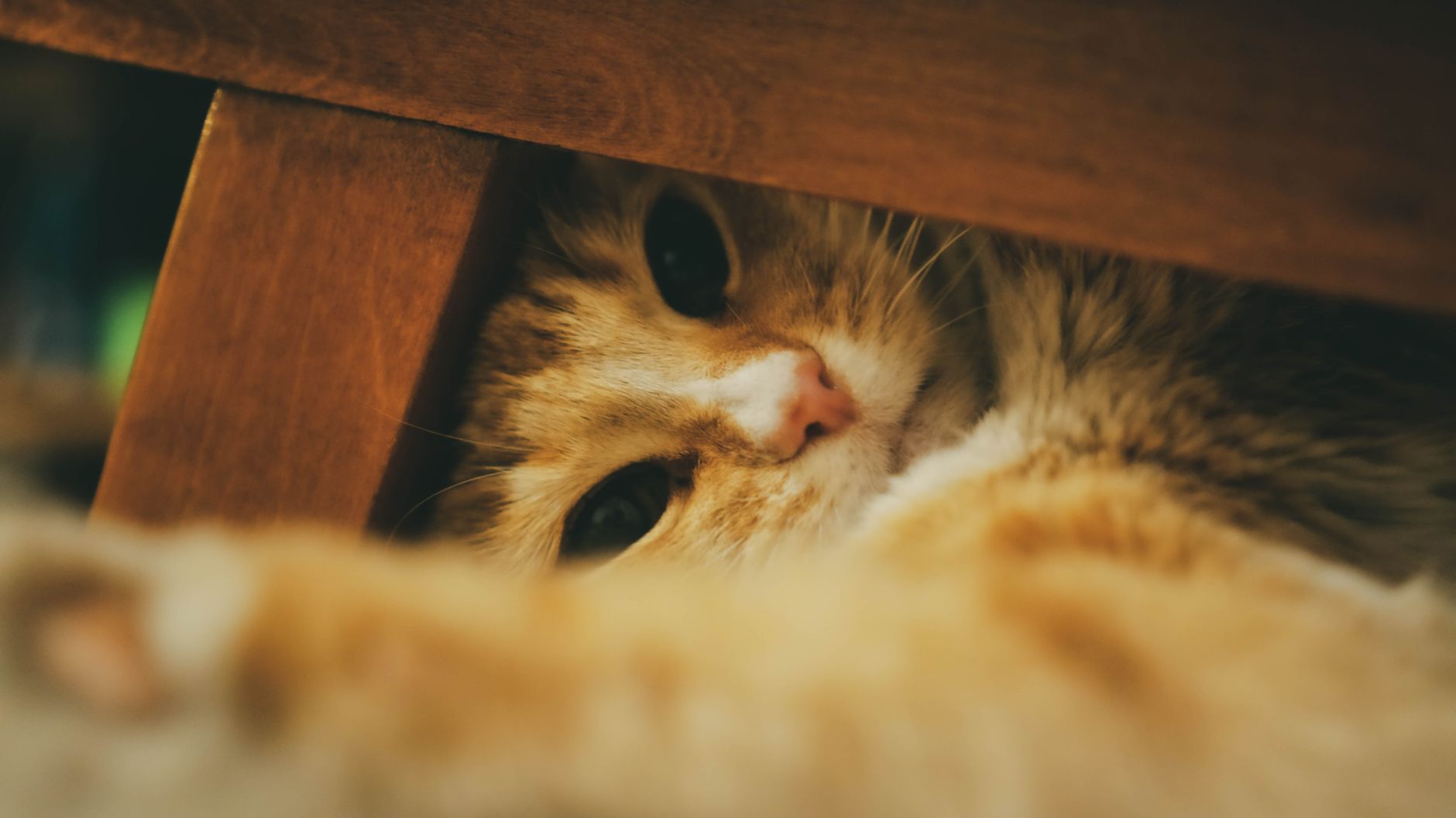
You walk in. Suitcases in the hall, grin on your face, and you call me. I look at you from the top of the wardrobe, turn my head away, and go back to sleep. Three days of that and you are convinced I am holding a grudge.
I am going to disappoint you: I am not. Resentment requires a projection through time that my brain does not do. What is actually going on is both simpler and more interesting. And it resolves far faster once you understand it.
What really happened while you were away
A cat lives in a territory, and that territory is made of smells as much as walls. We mark constantly, with glands on the cheeks, chin, flanks and paw pads. Invisible to you, it is my map of the world.
Over two weeks without you, several things happened:
- Your scent faded throughout the house. My territory lost one of its main components.
- I re-marked your areas with my own scent, which is a normal, healthy adaptation.
- A stranger’s scent passed through, from whoever came to feed me.
- The rhythm changed: less noise, less traffic, meals at different hours.
Then you come back loaded with unfamiliar smells: sand, other animals, hotel, car, bags that smell of a cellar. To me it is not exactly you walking in. It is someone who looks like you and smells wrong.
My reaction is not sulking. It is olfactory caution. I keep my distance while I re-identify you.
The four typical reactions
The royal ignore
The most common. I look at you like furniture, do not answer, and go to sleep elsewhere. It lasts a few hours to three days. It is the mildest version and it resolves by itself.
Total clinginess
The exact opposite, and in fact the better indicator of real stress. I will not leave you alone, I vocalise, I follow you to the bathroom, I sit on your keyboard. I was frightened, and I am checking you are not leaving again.
Brief aggression
A swipe when you reach out, a warning nip mid-stroke. Common in already anxious cats. It is not spite, it is a badly translated request for space.
Soiling
A wee on your suitcase, your bag, your bed or your armchair. This is the most misread of the lot. I am not taking revenge: I am mixing my scent with yours on the object carrying the foreign smell, to rebuild a family scent. It is clumsy, but it is an appeasement gesture, not an act of war.
What not to do when you get back
- Forcing me out of hiding, picking me up, insisting on cuddles. The fastest way to make it last longer.
- Taking offence and ignoring me back. A human playing who-sulks-longest against a cat will always lose.
- An immediate deep clean, washing every textile, hoovering everywhere. You would erase the last markers I had left, at exactly the wrong moment.
- Unpacking in the middle of the living room. It is the biggest concentration of foreign smells in the house.
- Inviting people round that evening to tell them about the holiday.
The method that works in three days
Day 1: benign indifference
Come in, put your things down, and do not look for me. Get on with your evening. Sit on the floor or the sofa and mind your own business. A cat always approaches whatever is not chasing him. Let me come and sniff your ankles, your bag, your shoes: I am doing my detective work.
Shut the suitcases in a separate room while you empty them, and put the dirty washing straight in the machine.
Day 1 as well: give me your scent back
The single most effective move in this whole article. Take a t-shirt you have worn, unwashed, and put it in my bed or my favourite corner. You have just reinjected your scent into my territory without touching me.
Then, if I accept the approach, rub a clean cloth gently on my cheeks and then over your hand and lower legs. That facial scent transfer speeds up reconciliation enormously. It is exactly what I would do myself by rubbing against you.
Day 2: restore the rhythm, not the cuddles
Go back to the old timings: meals at the same hours, litter cleaned at the same moment, the usual bedtime. Predictability reassures me far more than affection. A cat knows where he stands when the day has the shape it always had.
Day 2 or 3: play, not stroking
I reconnect through play, not through cuddles. Get out a wand toy and offer a proper ten minute hunting sequence, with a real catch at the end. Play puts me in a positive state and associates you with it directly.
A pinch of matatabi or silvervine chew or a pot of fresh cat grass on your return also works nicely to build a pleasant association.
When the stress runs deeper
If after a week I am still hiding, still snappy, or the soiling continues, we step it up.
- A calming pheromone diffuser. The feline pheromone diffuser recreates the reassuring facial marking in the main living room. Allow two to three weeks to judge, and plug it in openly, not behind furniture.
- A calming supplement. A course of alpha-casozepine milk protein or a plant based calming spray on the bedding helps naturally anxious cats.
- Calm the territory again: meals somewhere quiet, ideally in a wide ceramic bowl that does not press on the whiskers, litter tray away from through traffic, and a high hiding place always available.
For next time
The best way to handle coming home is to prepare the leaving.
- Keep me at home rather than in a cattery where possible. I am attached to the place far more than to people.
- The same person calling in, ideally at the same times, playing for five minutes rather than only filling the bowl.
- Change nothing just before you go: not the bowl, not the litter, not the furniture layout.
- Leave worn clothes in my sleeping spots, and do not wash everything before departure.
- Plug in a diffuser a few days before leaving for sensitive cats.
In short
I am not sulking, I am re-identifying you. Give me your scent, force nothing, restore my timings, and play with me. Within two or three days I will be asleep on your lap as though nothing happened.
And I will never mention those two weeks again. That part, I genuinely do better than you.
Purrs, Sachat 🐾
Related reading
- Natural Anti-Stress Solutions for Cats: Sachat’s Guide
- Essential Oil Diffusers vs Pheromones: Cat Safety
- Cat Meowing at Night: Causes and How to Fix It
- Natural Cat Toys: My Top 6 Picks (One Japanese Secret)
- Cat Marking Territory: 6 Solutions That Actually Work
- Aggression in Cats: Understand and Calm Your Feline
Frequently asked questions
My cat is ignoring me after the holidays, is it resentment?
No. Resentment requires a projection through time that the feline brain does not perform. What the cat experiences is olfactory caution: your scent faded from the territory and you return carrying unfamiliar smells. They keep their distance while re-identifying you, usually for a few hours to three days.
Why did my cat wee on my suitcase when I got back?
It is not revenge but a clumsy appeasement gesture: the cat mixes their scent with yours on the object carrying foreign smells, to rebuild a familiar family scent. Do not tell them off, and clean without bleach or ammonia, which smell like urine and invite a repeat.
What should I do when I get home to reconnect with my cat?
Put your things down without looking for them, shut the suitcases in a separate room, and leave a worn unwashed piece of clothing in their bed to reinject your scent. Restore the usual timings the next day, then offer a hunting play session: cats reconnect through play far more than through cuddles.
My cat will not leave my side since I got back, is that normal?
It is common and often signals more stress than being ignored. The cat is checking you are not leaving again. Reassure them with regular timings rather than intense cuddling, and offer short daily play sessions to release the tension.
Is it better to leave a cat at home or in a cattery?
At home in the large majority of cases: cats are attached to their territory far more than to people. The ideal is a daily visit from the same person, at the same times, playing for five minutes as well as filling the bowl and cleaning the tray.
My cat has stopped eating since I returned, should I worry?
Beyond 48 hours without food, yes, this is a veterinary emergency and not a sulk. The cat liver copes very poorly with fasting and can develop hepatic lipidosis. Below that, offer palatable food somewhere quiet, away from the litter tray.