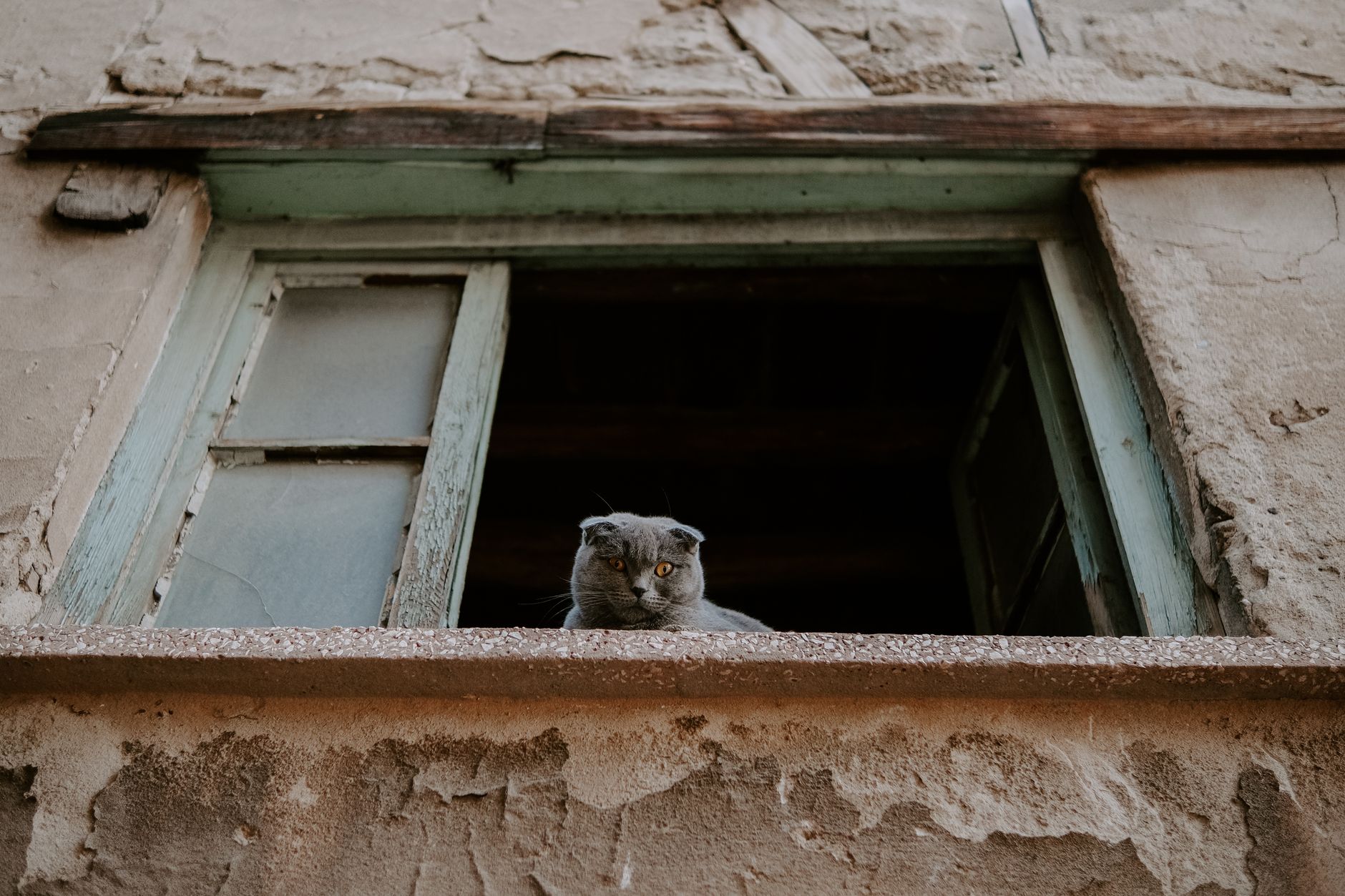
My cat meows at night: causes and solutions to get your peace back
Hi, it’s Sachat! 🐾 Let me guess: it’s 3am, you’re buried under your duvet, and you’re listening to a lyrical concert worthy of an Italian opera. Meow. Meeeow. MEEEEOW. And it’s me, well, one of my kind, singing at the top of my lungs out in the hallway.
I get it. I really do. But before you throw a pillow at me (which, by the way, never works), let me explain what’s going on inside my little feline head. Because trust me, we never meow for nothing. We always have an excellent reason… even if it seems completely absurd to you, poor sleepy human.
Why do I meow at night? The real reasons
Contrary to what you might think, I’m not doing it to torture you (well, not always). Night-time meowing is a message. And there are several possible translations.
1. I’m bored stiff
You spent your day out and about, and me? I slept for 16 hours. So at 2am, I’m fresh as a daisy and ready to conquer the world. If my day hasn’t been stimulating enough, I’ll go looking for action… and wake you up so I have an audience.
We cats are naturally active at dusk and dawn. It’s in our hunter genes. If nobody has channelled that energy, guess where it ends up? In my vocal cords.
2. I’m hungry (or I think I’m hungry)
My cat stomach is a frighteningly precise clock. If you usually feed me in the morning and I wake up feeling a little peckish, I’m going to let you know about it. Loudly. It’s my way of saying “room service is running late”.
3. I’m demanding attention
Let’s be honest: sometimes I just miss you. You’re asleep, you’re not stroking me, you’re not talking to me. The horror! So I vocalise until you react. And the problem is that if you get up to calm me down… I’ve just learned that it works. Jackpot for me.
When meowing hides a health problem
Now I’m getting serious, because this matters. Sometimes I don’t meow out of stubbornness or boredom. I meow because I’m not feeling well. And that’s something you need to learn to spot.
Older cats and night-time confusion
If I’m starting to get on in years (say, 10 and over), I might be suffering from cognitive issues, a bit like a feline form of disorientation. I wake up in the night, I’m not quite sure where I am, and I meow, sometimes in a plaintive, lost way. It’s heartbreaking, I know.
Hidden pain or illness
Hyperthyroidism, kidney problems, high blood pressure or simply joint pain can make me more vocal at night. If my meowing suddenly changes in tone, becomes more intense or comes with other signs (weight loss, excessive thirst, restlessness), get me to the vet.
My cat-approved solutions for peaceful nights at last
Right, now that we’ve covered the causes, let’s get down to business: how to win back your precious hours of sleep. Here are my tips, tested and approved by my own paw pads.
1. Wear me out before bed
The golden rule: a tired cat is a quiet cat. Set up a big play session an hour before your bedtime. Get out the feather wand, make me run, jump and hunt. Mimic a real hunt: stalk, capture, and… a meal right after. That’s my natural cycle! After that, I’ll be far too wiped out to give a concert.
If you want to dig deeper, take a look at my article on the best games for indoor cats. Plenty there to keep me busy!
2. Time my last meal right
Give me my biggest meal just before you head off to bed. Full belly = satisfied cat = sleeping cat. You can also use a programmable automatic feeder to serve me a little snack at the times when I’m likely to start asking.
I love the PetSafe automatic kibble feeder – Amazon: it dispenses portions at fixed times, so I no longer have any reason to come and wake you for my early breakfast. You sleep, I snack. Everyone’s happy.
3. Enrich my environment
While you sleep, I need to be able to keep myself busy on my own. A cat tree, a snuffle mat, kibble-dispensing toys or a water fountain that intrigues me… all of that transforms your nights. The more I have to explore, the less I need to bother you.
Personally, I’m crazy about the Trixie interactive snuffle mat, or the Sunnyflower snuffle mat on Zooplus: you hide a few kibbles in it, and I spend ages digging them out with my paws. Mental stimulation guaranteed, and meanwhile, I leave you in total peace.
4. Ignore me (yes, really)
I know, it’s hard. But if you’ve ruled out any health problem and I’m meowing just to get your attention, the best strategy is total indifference. Not a word, not a glance, not a cuddle. At first I’ll redouble my efforts (it’s called the “extinction burst”), but if you hold firm, I’ll eventually understand that it’s pointless.
5. Create a soothing evening routine
We cats love our rituals. A regular evening routine (play, meal, cuddle, bed) helps me understand that night-time is quiet time. You can also diffuse calming pheromones to reduce my stress and restlessness.
The Feliway pheromone diffuser – Amazon, or the Feliway Classic diffuser on Zooplus works wonders on anxious or restless cats. It creates an “all is well” atmosphere that naturally encourages me to relax. To learn more, take a peek at my guide on how to manage stress in cats.
👉 My verdict: if I had to recommend a single winning combo, it would be the automatic feeder for my little night-time hunger pangs plus the pheromone diffuser for my inner zen. Your nights will thank me!
What you must NEVER do
A quick but important reminder, because some humans make mistakes with the very best intentions.
Don’t punish me. Shouting, spraying me with water or shutting me away will only increase my stress and make things worse. I don’t understand punishment, I just understand that you’ve become scary.
Don’t give in out of tiredness. I know you’re exhausted. But every time you cave, you remind me that my meowing works.
Don’t ignore a sudden change. If I suddenly become vocal for no obvious reason, that deserves a vet visit before anything else.
In short: patience pays off
There you go, now you know everything! My night-time concerts almost always have an explanation: boredom, hunger, a bid for attention or a health concern. The key is to identify the real cause before trying to correct the behaviour.
With a good play schedule, a stimulating environment, a regular routine and a bit of consistency (a lot of consistency, actually), you’ll get your peaceful nights back. And me? I’ll be purring quietly at the foot of your bed instead of howling in the hallway.
Go on, sweet dreams… and the same for me, I promise. 😴
Purrs, Sachat 🐾
Related reading
Frequently Asked Questions
Why does my cat meow at night?
Often out of boredom, hunger, a need for attention, unspent energy or stress. In an elderly cat, it can signal pain or a cognitive disorder.
How do I stop a cat meowing at night?
Play intensely in the evening, give the last meal late, enrich the environment and keep a stable routine. Do not give in every time.
When should I see a vet about night-time meowing?
If the meowing is sudden, intense or in an elderly cat: see a vet, as it can reveal pain or hyperthyroidism.