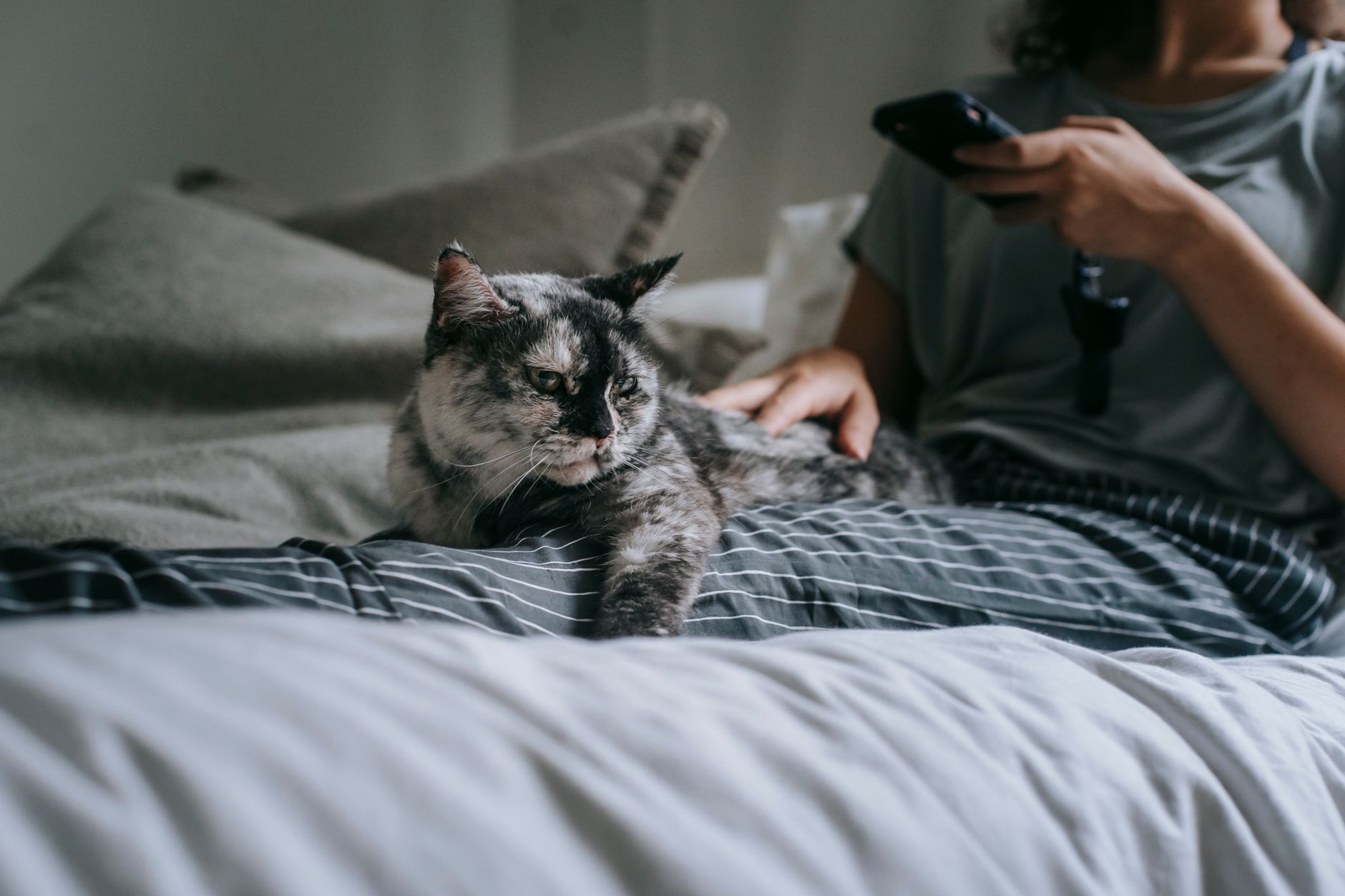
4:12 in the morning. A paw on your cheek. A pitiful meow worthy of a cat who hasn’t eaten in three weeks (when his bowl was overflowing only last night). I see you, human with the dark circles. And I’m going to let you in on a cat secret: if I wake you at night to eat, it isn’t to torment you. Well, not only that. There are real reasons behind this little nocturnal circus, and above all, there are gentle solutions that actually work. Settle in, I’ll explain everything.
Why I wake you at night (the real reason)
Before you grumble, understand one thing: a cat is programmed to hunt at dawn and dusk. It’s written in my genes, inherited from my desert ancestors. When the sun comes up, my internal clock screams “time to hunt”, which means “time to eat”. You’re asleep, I’m in top form. Of course it causes friction.
Genuine hunger
If you give me a single large meal in the evening, my stomach (which is the size of a ping-pong ball) is empty well before morning. A cat digests fast. The result: by 4am I’m genuinely hungry, and I let you know with all the subtlety of a pneumatic drill.
Boredom and surplus energy
If I’ve spent my day sleeping while you were at work, I have a full tank of energy come evening. That energy has to go somewhere. And guess who it lands on?
The habit you created (yes, you)
Here’s the part that stings: the very first time I woke you and you got up to fill my bowl, I worked out something brilliant. “Meowing at night = food.” You trained me without realising it. Well done.
What you must absolutely NOT do
I know it’s tempting, at 4am, to drag yourself up like a zombie and serve me just for some peace. Fatal mistake. Every time you give in, you reinforce the behaviour. To me, even an irritated “no” or a stroke to settle me is attention, and therefore a reward.
- Do not feed me when I demand it at night, ever.
- Don’t talk to me, don’t touch me, don’t even look at me. Total indifference is your weapon.
- Don’t shout at me. It only winds me up and stresses me, and I’ll start all over again, worse than before.
Brace yourself for one thing: when you stop giving in, I’ll meow LOUDER at first. This is called an extinction burst. Hold firm for a few nights, it’s actually the sign it’s working.
Sachat’s method for full nights of sleep
Now the real action plan, the one that turns your bawling cat into a peaceful ball of fur.
1. Split up my meals
Rather than one big meal, spread my ration across several small portions over the day, with the last one as late as possible before you go to bed. An automatic feeder programmed to release a portion around 5am can also work wonders: I get my dose without needing to wake you. A clean, stable bowl helps too, I’m fussy about the quality of my crockery. I love a nice ceramic bowl – Amazon that doesn’t slide about and doesn’t hold onto smells.
2. The big evening play session
This is THE secret. Thirty minutes before you go to bed, play with me intensely. We’re talking about a proper hunt: I need to run, jump and pounce until I’m out of breath. A natural cat ball – Amazon that rolls unpredictably drives me completely wild (in the good way). We finish the ritual with one last small meal. Hunt, feast, wash, sleep: that’s my natural cycle. Respect it, and I’ll crash out for the night.
3. Soothe my stress
Sometimes my night-time waking hides anxiety, especially if something has changed at home (a house move, a new arrival, your schedule turned upside down). A Feliway calming pheromone diffuser – Amazon plugged in where I sleep can help me feel safe and let go at night.
How long before it works?
Be patient and, above all, be consistent. Routine is everything to me. If you give in one night and not the next, you send me a garbled message and I no longer understand a thing. Generally, count on 1 to 2 weeks of absolute firmness to break the habit. The first few nights will be the worst (remember the extinction burst), then you’ll see the wake-ups grow further apart, shorter, and finally disappear. The whole household must hold the same line: if your partner cracks while you resist, we’re back to square one.
When to see the vet
Careful, this point matters. Not every night-time waking is about habit or play. If I suddenly start begging for food like a starving creature when I’m eating normally, if I lose weight, if I drink an enormous amount, or if I become disoriented and meow for no apparent reason at night, this is no longer a whim.
Certain medical causes (thyroid problems, diabetes, age-related disorders in the senior cat) show up as excessive hunger or night-time meowing. In that case, don’t play vet yourself: book an appointment with a real professional for an examination. Only they can make a diagnosis and treat me properly.
FAQ
My cat wakes me at night, should I shut him out of the bedroom?
You can close the bedroom door, but be ready for scratching and meowing behind it for the first few nights. If you choose this option, hold firm without opening it, otherwise you teach me that scratching opens the door. Always combine this measure with the evening play and the late meal, otherwise I’ll just take my frustration out on the door.
Should I leave dry food available overnight?
Leaving a little dry food accessible in the evening can head off the 4am hunger for some cats, provided I’m not overweight. The best option is still a programmed automatic feeder that releases a portion early in the morning: I get fed without associating you with the meal.
Does a kitten wake more at night than an adult cat?
Yes, clearly. A kitten has a small stomach, boundless energy and a sleep cycle that’s still immature. Give plenty of small meals and play sessions during the day. With time and good habits, I’ll settle my rhythm to match yours.
And if nothing works after several weeks?
If, despite a consistent method (evening play, split meals, night-time indifference, a calm environment), I keep waking you, talk to your vet. They can rule out a medical cause and, if needed, point you towards a feline behaviourist.
Purrs, Sachat 🐾