Let’s talk about a true classic of the cat trade: the hairball. That glorious moment when, after a 4 a.m. concert of “heuk-heuk-heuk”, I gently deposit a cylinder of felted fur on your finest rug. It’s not spite, human. It’s mechanics. And the good news is that you can prevent almost all of it.
Where do hairballs come from?
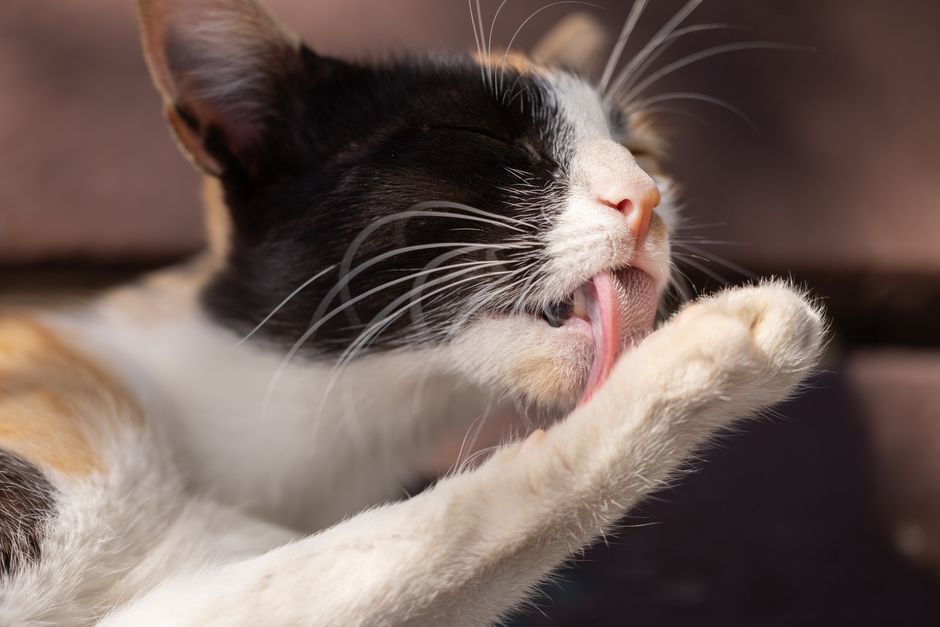
When I groom myself (four hours a day, just so you know), my rough tongue pulls out the dead hairs, which I then swallow. Most of them pass through my digestive system without trouble. But when there are too many, they clump together in my stomach into a trichobezoar, the famous ball, which I then have to bring up.
Brushing: 80% of the solution
Every hair you brush out is a hair I don’t swallow. Unbeatable maths.
- Short hair: 2 brushings a week, daily during shedding season
- Long hair: every single day, no exceptions
- A de-shedding brush – Amazon works wonders when I’m moulting
All my brushing tips (and the list of the right tools for each coat type) are in my complete grooming guide.
The natural solutions that really help
1. Cat grass (the real, edible kind)
Young barley or wheat shoots give me fibre that helps the fur move along, and makes it easier to bring back up what needs to come out. A grow-your-own cat grass kit – Amazon costs about three kibbles and does me a real favour. Don’t confuse it with catnip, by the way: I explain the difference in my article on the benefits of cat grass.
2. Fibre in the bowl
A little cooked courgette, some squash, or a teaspoon of psyllium mixed into the wet food helps the fur slide along in the right direction. My natural feeding guide spells out the right amounts.
3. Salmon oil
Half a teaspoon of salmon oil – Amazon a day lubricates my gut and makes my coat stronger, which means fewer dead hairs to swallow in the first place.
4. Cat malt paste
Malt paste – Amazon is the classic digestive lubricant: a pea-sized blob 2 to 3 times a week during shedding season. Most of us love the taste, which certainly doesn’t hurt.
Hydration, the secret weapon
A well-hydrated cat has a gut that works, and fur that passes through instead of sitting around. Daily wet food, water spots in several places, a fountain if needed: all my tricks are in my guide on how to get your cat to drink more.
What NOT to do
- ❌ Paraffin oil without veterinary advice: risk of it going down the wrong way and causing pneumonia
- ❌ Butter: the urban legend that ends in diarrhoea
- ❌ Ignoring repeated vomiting: beyond hairballs, it can hide something else, see my article on the cat who keeps being sick
In a nutshell
Regular brushing + fibre + hydration + a bit of malt during shedding season: with this quartet, those nightly “heuk-heuk” concerts become extremely rare. Your carpet will thank you, and so will I.
Purrs, Sachat 🐾
Related reading
Frequently Asked Questions
How do I prevent hairballs in cats?
Regular brushing, fibre (cat grass, psyllium), good hydration and a little malt during moulting greatly reduce hairballs.
Why does my cat vomit hairballs?
As it grooms, it swallows dead hairs that clump together in the stomach and that it brings back up. Frequent brushing means it swallows fewer.
When are hairballs a cause for concern?
If your cat strains without bringing anything up for 24 hours, stops eating or has a hard tummy: this is a veterinary emergency.