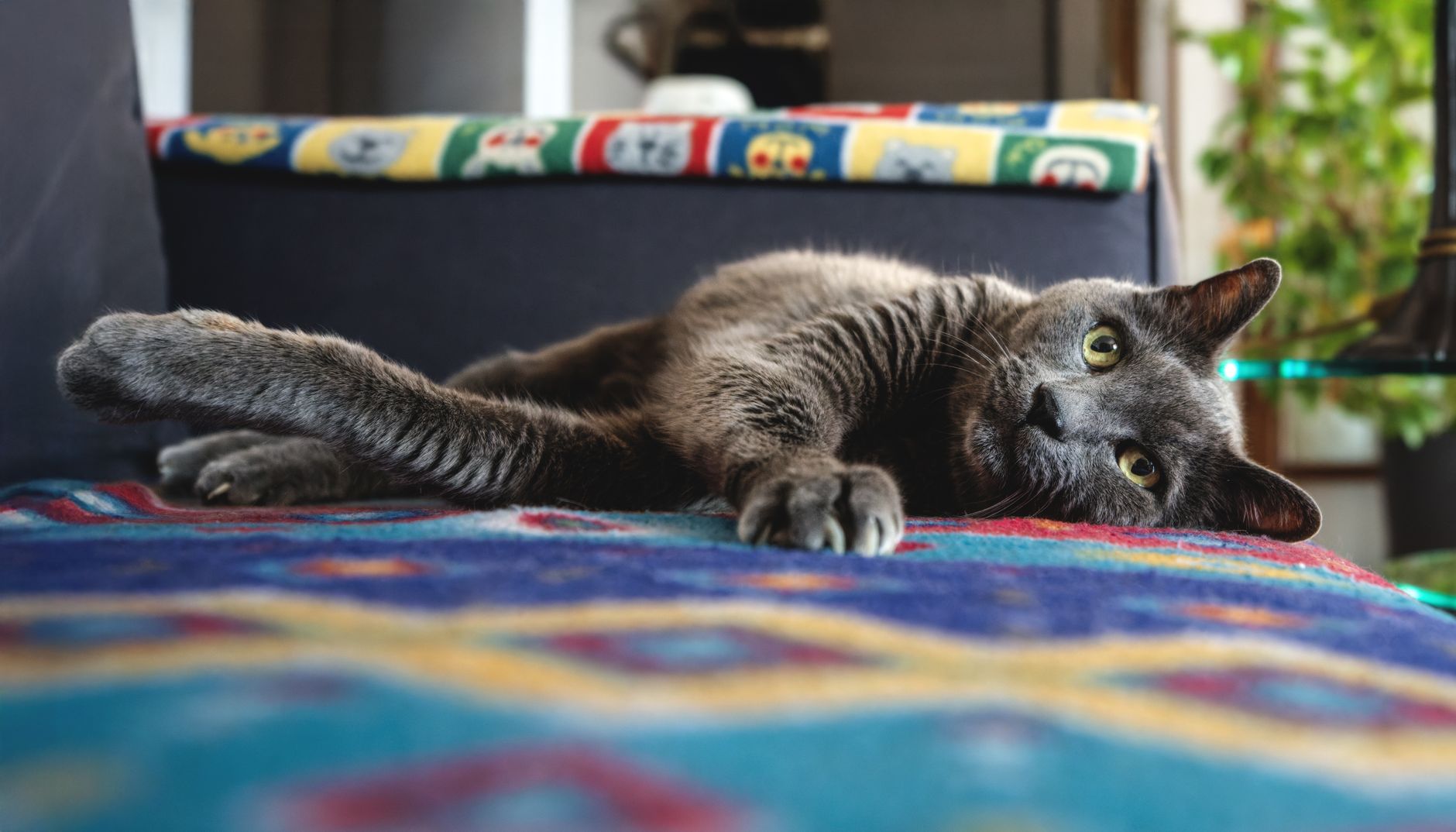
Hello, it’s Sachat. You’ve scooped your old companion into your arms and there’s a surprise: you can feel the ribs, the hips, the backbone poking out beneath the fur. Before, it was a lovely soft mattress, and now it’s more like a bag of bones. I understand your worry, because for us older cats, losing weight is almost never a minor detail. It’s often the first signal the body sends out when something’s amiss inside.
So we’re going to pick apart together the main causes of a senior cat losing weight, what you can observe at home, and above all what you can do. But I’ll say it straight away, and I’ll keep saying it: weight loss in an older cat means an appointment with the vet. Not tomorrow, not next week. Now.
Why a senior cat loses weight: it isn’t “normal”
You often hear that old cats inevitably waste away with age. That’s false, and it’s even a dangerous bit of received wisdom. Yes, from 11 to 12 years old, our metabolism changes and we sometimes absorb protein less well. But visible weight loss is never a simple effect of the calendar. It’s a symptom.
The trap is that it creeps in quietly. We may eat the same, purr the same, and yet the grams melt away week after week. The habit to adopt: weigh your cat regularly. A kitchen scale and a basket, you hold us, you weigh the lot, you subtract the basket. Note the figure. If you see 5 to 10% of the weight melt away over a few weeks, that’s a red flag.
The signs that should alert you
- We drink a lot more and wee more often or in larger amounts.
- We eat like an ogre but lose weight anyway (yes, it happens, and it’s very telling).
- We snub the bowl or circle it without eating.
- The coat turns dull, greasy or full of knots because we groom less.
- We vomit, have diarrhoea, or hide more than usual.
The main medical causes of weight loss
I’m not a vet, I’m a very well-informed cat. My job here is to help you understand, not to diagnose. Here are the culprits a vet will look for first in a senior who’s losing weight.
Chronic kidney disease
This is the great classic of the older cat. The kidneys wear out, filter less well, and the body becomes exhausted. Typical symptoms: we drink enormously, urinate a lot, lose our appetite and waste away. It’s detected with a blood test and a urine analysis, and it’s managed very well when caught early, with a suitable diet and monitoring. On your vet’s advice only, a natural kidney supplement for cats – Amazon can sometimes support a treatment, never replace it.
Hyperthyroidism
An overactive thyroid gland turns a quiet grandad into a famished ball of energy losing weight before your eyes. The star sign: we devour everything, demand food non-stop, and yet grow thin. It’s very common after 10, it’s diagnosed with a blood test and it’s treatable. Yet another reason to dash to the vet rather than rejoicing at a “good appetite”.
Diabetes
Intense thirst, copious urine, hunger that climbs then an appetite that collapses, and weight loss: diabetes ticks a lot of boxes. Here again, a blood test, and rigorous monitoring that genuinely changes the life of the cat concerned.
Digestive, dental and other problems
A sore tooth, an inflamed gum, and there you go, eating becomes a chore. Inflammatory bowel diseases, parasites, or more serious issues like certain tumours also cause weight loss. In short: the list is long, and that’s exactly why self-diagnosis at home is never enough.
The vet visit: non-negotiable
I’m going to be very clear, because it really matters. If your senior cat is losing weight, the only right move is the vet. Not a change of kibble in the hope it’ll pass, not a supplement bought at random, not “let’s wait and see”. You wait and see, and in the meantime a treatable disease progresses.
The vet will weigh your cat precisely, examine them, palpate the thyroid and the abdomen, and propose a work-up: blood test, urine analysis, sometimes an ultrasound scan. The earlier it’s caught, the better the chances of managing it well. To help, arrive prepared: note how long it’s been going on, the weight curve if you’ve been weighing, the behaviour changes, the amount of water drunk. These details are worth their weight in gold for the diagnosis.
How to support a senior cat at home
Once your vet has made a diagnosis and a plan, you can do a great deal for our daily comfort. Careful: everything that follows comes alongside medical care, never in its place.
Making food irresistible
A cat who’s losing weight often needs their appetite reawakening. Wet food nearly always wins over kibble for a senior: more appetising, richer in water, easier to chew if the teeth are tiring. A premium wet food like Almo Nature for cats – Amazon or the very tasty Inaba – Amazon recipes can wake up a flagging appetite. A cat’s tip: warming the wet food a little releases the smells and makes our mouths water.
The little food boosters
To help a dull coat and stimulate the appetite, a few drops of salmon oil for cats – Amazon on the bowl is often a real treat and a source of good fatty acids. And if digestive troubles get involved, your vet can approve some probiotics for cats – Amazon to support the gut flora. Always ask your vet’s opinion before adding anything, especially if a disease has been diagnosed.
The comfort that changes everything
A senior eats better in calm, away from the bustle and other animals. Raised, clean bowls, several small meals across the day rather than one big one, a quiet, warm corner: these are details that make a big difference. And patience, lots of patience. We just need to feel that we’re being looked after.
FAQ
My senior cat is losing weight but eating normally, is it serious?
It really warrants a vet visit. Losing weight while eating well is in fact a very suggestive sign of hyperthyroidism or diabetes. The body is burning or eliminating more than it absorbs. Don’t let the appetite reassure you.
From what age is a cat a senior?
Generally, we talk about a senior at around 11 to 12 years, and a very old cat after 15. From that age, an annual health check, or even every six months, becomes an excellent habit for spotting issues early.
How much weight loss should worry me?
Any visible weight loss in an older cat should be taken seriously. As a guide, a drop of 5 to 10% of the weight over a few weeks justifies an appointment without delay. Weigh regularly so you don’t miss it.
Can I give supplements to help them put weight back on?
Not blindly. A supplement doesn’t treat an underlying disease, and some can even be inadvisable depending on the diagnosis (kidney issues, for example). The right order: vet first, diagnosis, then supplements approved by them if needed.
Purrs, Sachat 🐾