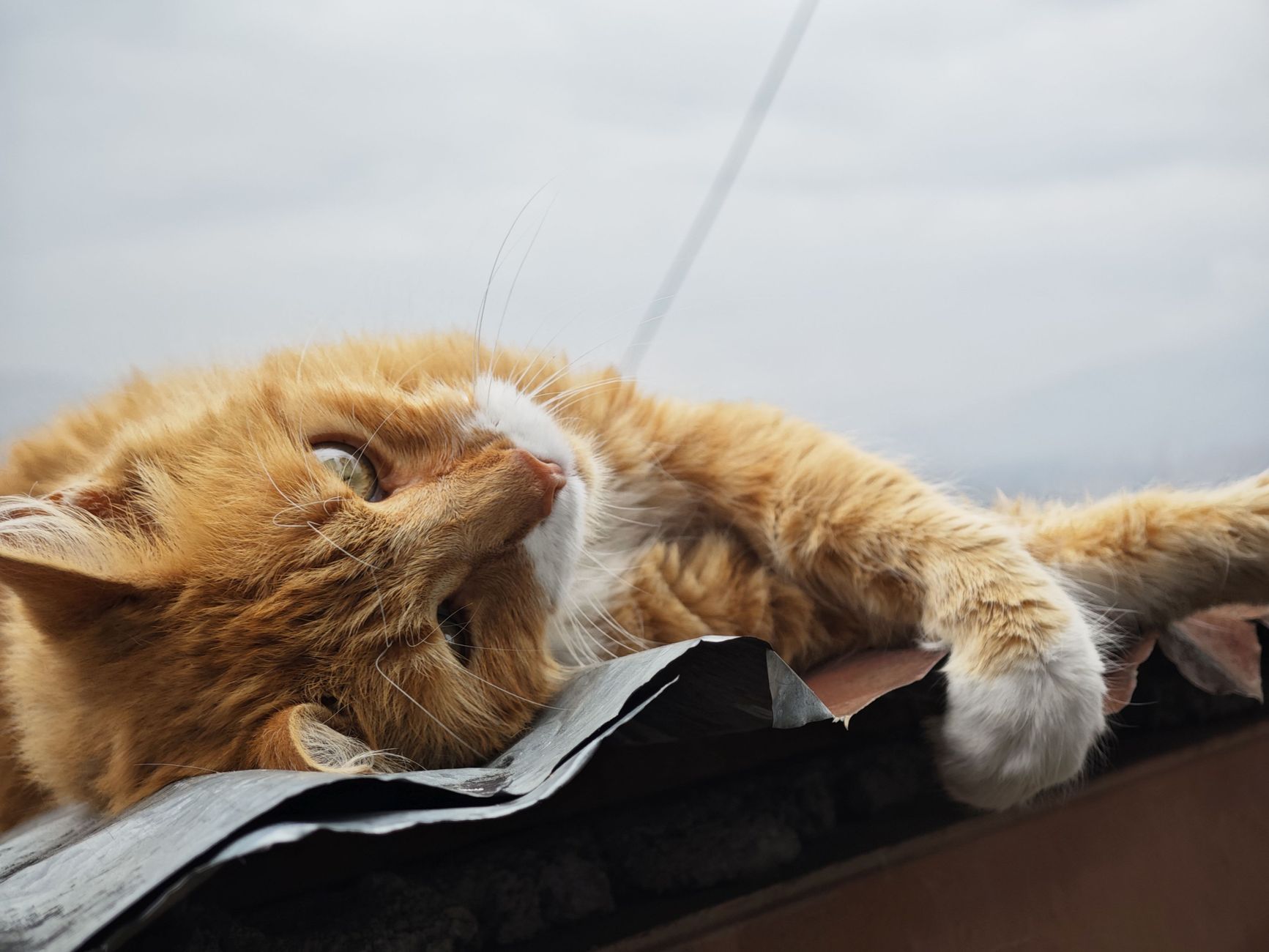
Hello, it’s Sachat. The other day, I wanted to jump onto the windowsill, my favourite lookout for keeping an eye on the pigeons. Well, I hesitated. A split second, a little twinge in the back leg, and hey presto, I pretended to sit down as if that had been the plan all along. Feline class, you know the type. But behind this little acting performance lies a real truth: we cats hide our pain like champions. And arthritis, that stiffening of the joints that affects an enormous number of moggies as they age, is one of the most discreet. Today, I’ll tell you how to spot it and how to soften your four-legged companion’s daily life, naturally.
What exactly is arthritis in cats?
Picture your joints as well-oiled hinges. Over time, the cartilage that cushions these hinges wears down, and movement becomes less fluid, sometimes painful. That’s arthritis, also called degenerative joint disease or osteoarthritis. And contrary to what people think, it isn’t reserved for grandad and grandma cats: it can affect younger adults, especially after a trauma, a poorly healed fracture, or in cases of excess weight.
The trouble is, a cat will never limp dramatically while making big sad eyes. We grit our teeth, adapt our movements, save our energy. As a result, many humans miss it for months. And every month counts for your kitty’s comfort.
The signs that should alert you
Since we’re skilled at concealment, it’s up to you to play detective. Here’s what often gives away an arthritic cat:
- They jump less high, or use an intermediate piece of furniture before reaching their perch.
- They go up or down the stairs cautiously, or even avoid them.
- They groom less, especially the lower back and rear end: the coat turns dull, sometimes matted.
- They sleep more and are less playful or more grumpy when handled.
- They go to the loo next to the tray, because stepping over the rim becomes a hassle.
No single one of these signs spells arthritis, but if they pile up, don’t stay in doubt. Only your vet can make the diagnosis, often with the help of an examination and X-rays. It’s also the vet who decides whether medical pain treatment is needed. My role is to help you improve the comfort around it.
Diet, your first ally
Omega 3, friends for the joints
If I had to keep just one nutritional reflex, it would be omega 3. These good fatty acids, in particular EPA and DHA, have a recognised soothing effect on the joints and contribute to ease of movement. The source cats love most is fish. A course of salmon oil rich in omega 3 – Amazon poured over the ration is often a real delight in the bowl, and most of us wolf it down with relish. Do still ask your vet for the right dosage, because the correct amount depends on your cat’s weight and condition.
Keeping a gazelle-like figure
Weight is the crux of the matter. Every extra gram is added pressure on already weakened joints. An overweight arthritic cat suffers more, it’s simple maths. Go for a quality diet, and if the waistline rounds out, talk through a slimming plan with your vet rather than cutting rations blindly. A raised ceramic bowl – Amazon can also help: eating without having to crouch and contort yourself, when your neck and back are stiff, is a small luxury that changes the day.
Adapting the home for a stiff cat
Here, you can work miracles without spending a fortune. The idea: remove pointless effort and make our living areas easy to access.
- Steps up to the high spots. We adore heights, it’s stronger than us. But a big leap becomes torture. A cat tree with tiered platforms – Amazon lets them climb step by step instead of in a single bound. Choose one with closely spaced, sturdy levels.
- A litter tray that’s easy to step into. A rim that’s too high means a guaranteed accident. Opt for a low-sided model, or cut out a more accessible entrance.
- Everything within paw’s reach. Water, food, bed and tray on the same level, to avoid trips up and down the stairs.
- Warmth and softness. Cold stiffens the joints. A cosy corner, sheltered from draughts, near a gentle source of warmth, is paradise for an aching back.
Gentleness, massage and supplements
An arthritic cat appreciates being handled delicately. Brushing becomes precious when we can no longer groom the lower back well: it untangles, stimulates circulation, and incidentally creates a moment of closeness. Gentle little massages, with the fingertips, around the muscular areas (never directly on a painful joint), can relax us. Watch our reactions: if we move away or growl, stop, no forcing.
As for supplements, certain formulas based on glucosamine, chondroitin or green-lipped mussel are sometimes recommended to support the cartilage. Be careful though: these aren’t miracle drugs, and not all products are equal. Before starting a course, ask your vet’s opinion, as they’ll be able to steer you towards what’s genuinely useful for your cat and compatible with any treatment they may be on. The golden rule stays the same: for anything to do with pain and diagnosis, it’s the vet who decides, not the internet, and certainly not a blogging cat, however charming.
Moving gently, but moving all the same
Counterintuitive, but true: complete immobility makes nothing better. A joint that no longer moves stiffens even more. The aim isn’t to make your kitty run a marathon, but to encourage small, regular, enjoyable movements. A feather wafted lazily, a ball rolled within reach, a few minutes of calm play a day: it keeps suppleness and morale up. Always adapt the intensity to what your cat tolerates, and stop the moment they seem tired.
FAQ
From what age can a cat develop arthritis?
Arthritis becomes common in older cats (from 10 to 12 years), but it can appear earlier, particularly after a trauma or in cases of excess weight. No age is entirely safe, so stay attentive to behaviour changes whatever your companion’s age.
Are natural remedies enough to treat arthritis?
No, and we need to be honest about that. Natural approaches (omega 3, home adaptation, weight management) greatly improve comfort, but they don’t erase the disease. Arthritis is degenerative and chronic. To manage pain, vet treatment is often needed alongside. It’s your vet who sets the right strategy.
Can I give my cat human anti-inflammatories?
Absolutely not. Many human medicines, such as paracetamol or ibuprofen, are toxic, even deadly, for cats. Never give any medicine without a vet’s prescription. Feline pain management is a very specific field that falls exclusively to your vet.
How do I know if my cat is in pain, since they don’t complain?
Watch the everyday details: fewer jumps, neglected grooming, a grumpier mood, hesitation in front of the stairs or the tray. These small changes speak volumes. At the slightest doubt, a visit to the vet lets you take stock and relieve your cat before discomfort sets in.
There you have it, you now know how to spot the signals and offer your wise old whiskered sage a gentler daily life. Growing old with creaky joints isn’t a foregone conclusion, especially when surrounded by an attentive human. Take care of your paws, and ours.
Purrs, Sachat 🐾