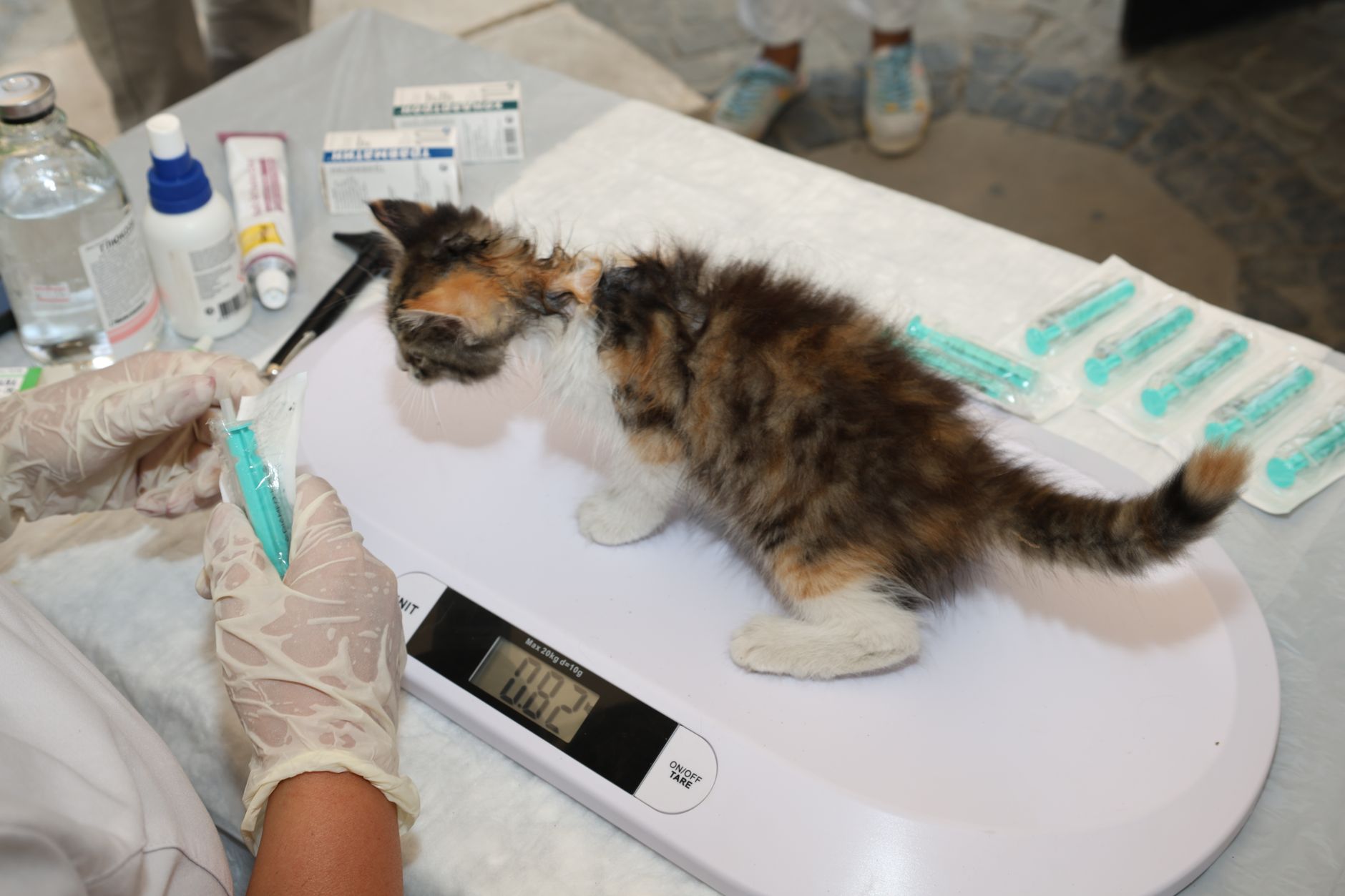
Hello, it’s Sachat! I still remember my first few weeks: tiny, clumsy, a runny nose and not the faintest idea what a syringe was. Spoiler: it stings for three seconds and then you get a load of cuddles. If you’ve just welcomed a kitten, you’re surely asking yourself a thousand questions about kitten vaccinations, worming, and all those little treatments that feel scary when you’re starting out. Breathe, I’m here. I’m going to tell you, from paw-pad height, everything you need to do so your new ball of fluff starts life on the right foot (well, all four paws).
Why kitten vaccinations are essential
A kitten is a sponge for germs. As long as it’s suckling its mother, it’s protected by her antibodies. But that protection melts like a kibble in a water bowl: by around 6 to 9 weeks, it becomes vulnerable. That’s where vaccines take over.
In practical terms, they train its little immune system to recognise the real baddies before they attack. Without it, certain diseases can carry off a kitten in a matter of days. Believe me, a jab is better than a veterinary emergency at 3 in the morning.
The diseases we vaccinate against
- Feline panleukopenia (feline distress): highly contagious, often fatal in kittens.
- Cat flu: the well-known feline cold, which can become chronic and make your life (and ours) a misery.
- Feline leukaemia (FeLV): recommended above all if your cat goes outside or comes across other felines.
- Rabies: compulsory for travelling abroad.
The vaccination schedule, step by step
No need to panic, it isn’t a marathon. Here’s how it generally goes, but your vet will adapt it to your little one’s lifestyle.
- 8 weeks: first injection (panleukopenia and cat flu, sometimes leukaemia).
- 12 weeks: booster, plus leukaemia if it wasn’t done earlier.
- 16 weeks: rabies if needed.
- 1 year: first annual booster, then according to your vet’s protocol.
The secret is consistency. A vaccine without a booster is like a scratching post with no cat tree: half useless. Note the dates in your phone, your kitten won’t do it for you (it has other things to do, like sleeping 18 hours a day).
Worming and parasite treatment: the forgotten basics
Vaccines are great, but they don’t do everything. A kitten almost always arrives with worms (charming, I know) and sometimes fleas. These unwelcome guests weaken an already fragile little body.
Worming
You worm a kitten every 2 to 3 weeks until 3 months, then once a month until 6 months. Your vet will give you the right product and the right dose according to weight. Never play apprentice chemist with adult-cat doses.
External parasites
For fleas and other squatters, your vet will prescribe a treatment suited to the age. As a complement and for prevention in the environment, some people rely on food-grade diatomaceous earth – Amazon to freshen up the sleeping areas. It doesn’t replace a vet treatment, but it helps keep the home cleaner.
The everyday little treatments you can do yourself
Good news: you don’t need a veterinary degree to pamper your kitten. Most basic care happens at home, gently, and it’s even a lovely bonding moment.
The ears
A kitten can build up earwax or pick up grime. Clean its ears with a gentle cat ear cleaner – Amazon, never a cotton bud pushed into the canal. If you see black, coffee-ground-like deposits, off to the vet: that smells of ear mites.
The eyes
Slightly weepy eyes are common in young cats. Clean gently with pet care wipes – Amazon soaked in saline solution, working from the corner of the eye outwards. If the discharge turns yellow or thick, see the vet.
The claws
No need to wait until your sofa is in tatters. Get your kitten used early to having its paws handled, and trim just the clear tip of the claw with a suitable claw clipper. That way you avoid the pink part, which is living and sensitive.
Good nutrition to support immunity
A well-fed kitten defends itself better. Its growth is lightning-fast, it needs a rich diet suited to its young age, not table scraps or adult kibble.
Go for a quality food, rich in animal protein, such as an Inaba Churu treats for cats – Amazon as a complement, or grain-free kibble – Amazon. Good hydration and a balanced gut flora also help it digest the kibble changes that are frequent when you adopt. Ask your vet for advice on moving from one food to another, we always make the transition gently over a week.
When to dash to the vet
I’ll say it again because it matters: I’m a blog cat, not a doctor. Some signs don’t forgive any delay. See the vet without delay if your kitten shows one of these symptoms:
- It refuses to eat for more than 24 hours.
- It has repeated diarrhoea or vomiting.
- It’s limp, prostrate, no longer playing at all.
- It’s breathing fast or with difficulty.
- Its temperature seems abnormal (a cold, lifeless kitten is an emergency).
The first vet visit is also the chance to ask all your questions, to have your kitten microchipped (often compulsory) and to set up the right follow-up. It’s an investment, but it’s the best one you’ll make for these next 15 to 20 years of purrs.
FAQ
At what age do you start kitten vaccinations?
Generally from 8 weeks for the first injection, followed by a booster around 12 weeks. Your vet will adjust according to your kitten’s health and lifestyle. The important thing is not to skip the boosters, otherwise the protection isn’t complete.
Does an indoor kitten need vaccinating?
Yes, absolutely. Even if it never goes out, you can bring in germs on your shoes, and some diseases like panleukopenia are very hardy in the environment. Panleukopenia and cat flu remain recommended for all kittens.
How much do the first vaccinations cost?
The budget varies by region and clinic, I’m not going to invent a precise figure for you. The best thing is to call your vet for a quote for the full primary vaccination course. Also factor neutering and identification into your first-year budget.
Can I treat a mild bout of cat flu myself?
You can ease your kitten’s symptoms by cleaning its nose and eyes with wipes and saline solution, and keeping it warm. But cat flu often needs veterinary treatment, especially in a young cat. Don’t delay if its condition worsens.
Purrs, Sachat 🐾