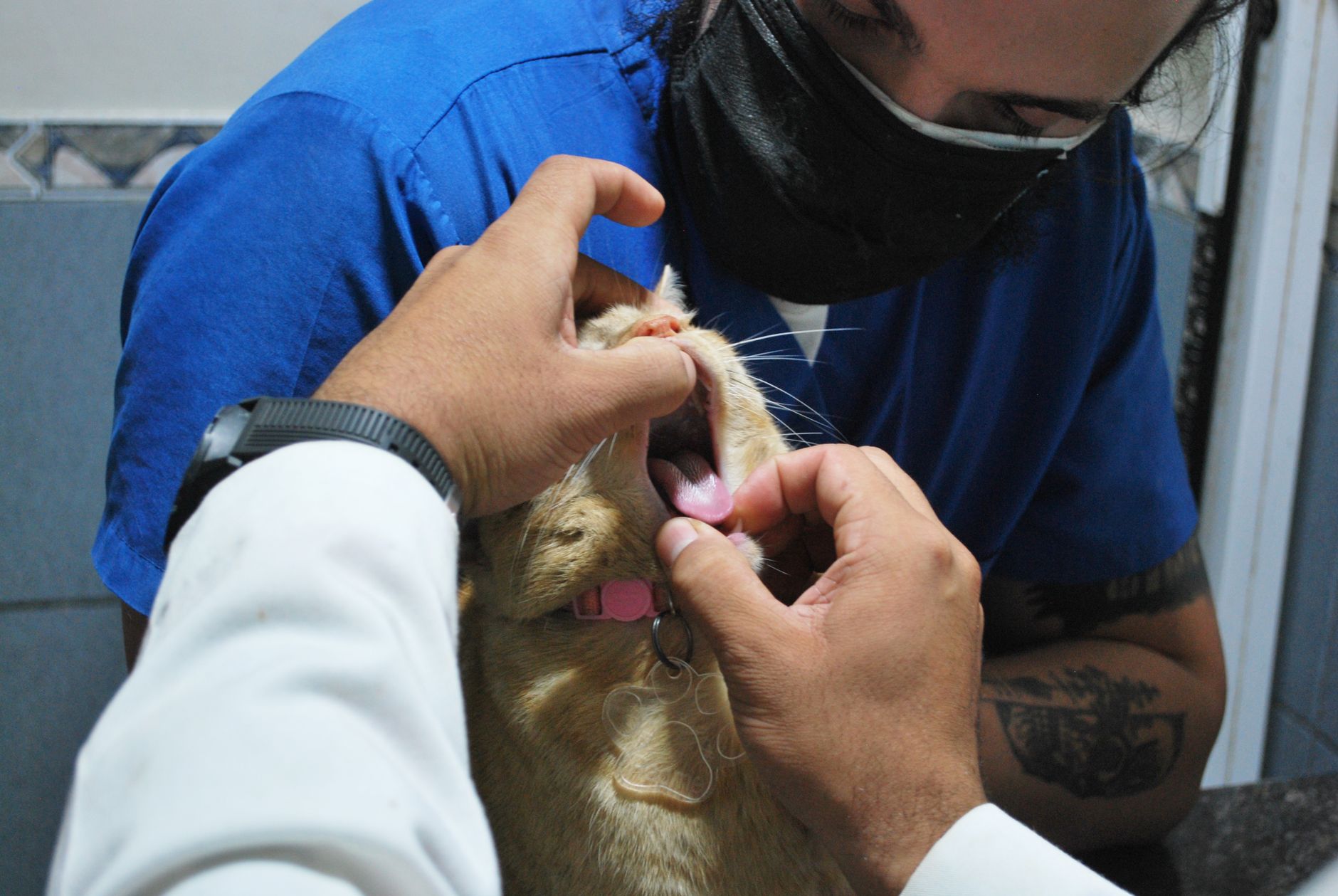
Hi, it’s Sachat. The other day my human lifted my lip to check my fangs, and I thought she was about to put me through an audition. In truth, she was looking for something important: the colour of my gums. And she is right to look. A cat’s gum in great shape is pale pink, smooth, with no bright red rim along the teeth. When it turns red, it means my body is trying to tell you something. Often it is nothing serious if you deal with it quickly. Sometimes it hides a real problem that hurts in silence (and we cats are champions at hiding pain). I will tell you everything: what it means, what should worry you, and above all when to take the car straight to the vet.
Red Gums in Cats: What Does It Mean?
A red gum is inflammation. The exact term is gingivitis: the band of gum that touches the tooth turns red, swollen, and sometimes it bleeds when brushed against. In us, it is extremely common, and the number one cause is dental plaque. You know, that sticky film that settles on the teeth after every meal. If nobody removes it, it hardens into tartar, and tartar is a nest of bacteria that irritates the gum continuously.
But gingivitis is only the ground floor. If nothing is done, it can progress to periodontitis: now the inflammation attacks the bone and the tooth’s attachment, which ends up loosening, then falling out. And there is a far tougher form, stomatitis (or feline chronic gingivostomatitis): a massive and extremely painful inflammation of the entire mouth, going well beyond the gum. This last one is not a simple hygiene problem, it is a genuine illness that calls for a vet, no argument.
What Causes My Red Gums?
There is more than one explanation, and that is exactly why we do not work it all out on our own from the sofa. Here are the most common avenues:
- Plaque and tartar: the great classic, especially in adult and elderly cats.
- Chronic stomatitis: an excessive inflammatory reaction, the immune system running riot is suspected. Very painful.
- Tooth resorptions: the tooth crumbles from the inside, it is extremely common in us and hurts like the dickens.
- Viruses: calicivirus, FIV or FeLV can weaken the mouth and keep the inflammation going.
- A poorly cleaned mouth: no hygiene routine, poorly suited kibble, and the plaque settles in quietly.
You see the problem: a red gum can come from a simple excess of tartar just as easily as from a serious viral illness. It is the vet, and only the vet, who sorts it out with a mouth examination, sometimes under anaesthetic, and tests if needed.
The Signs That Should Alert You
The red colour is the visible signal. But since we are good at pretending everything is fine, keep an eye on these everyday clues too:
- Bad breath that makes you recoil (cat breath is never meant to smell like a bin).
- The cat eating less, circling the bowl then walking off, or only swallowing soft food.
- He drools, sometimes with a trickle tinged with blood.
- He rubs his cheek or taps his mouth with his paw.
- Brown tartar visible on the back teeth.
- A neglected coat: if chewing hurts, I no longer groom myself properly.
Just one of these signs on top of red gums, and it is a vet appointment, not a wait-and-see. Mouth pain wears us out and kills our appetite, which can quickly become dangerous in a cat that has stopped eating.
When to Rush to the Vet (and Why Quickly)
I am going to be very clear, because it is important: red gums are not treated at home. There is no over-the-counter miracle product that replaces a diagnosis. The vet will look at the real state of my mouth, spot any damaged tooth, gauge the inflammation and look for the cause. Depending on the case, he will suggest a scale and polish under anaesthetic, the extraction of teeth that are too badly affected, treatment of the inflammation or pain, and sometimes tests to rule out a virus.
See a vet without delay if you notice blood, if your cat has not eaten for more than 24 hours, if he drools a lot, if he has sudden bad breath or if he seems lethargic. The sooner we step in, the lighter the procedure, and the less my cat pal suffers. Putting it off means letting the tartar and inflammation gain ground, so ending up losing teeth we could have saved.
What You Can Do to Look After My Mouth (as Prevention)
Once the vet has done his job and given you the go-ahead, you can set up a routine to limit the return of plaque. Be careful: all of this is prevention on a healthy mouth, never treatment of an already inflamed one.
Look after daily hygiene
Brushing the teeth remains the gold standard, with a special cat toothpaste (never yours, fluoride is toxic for us). For little touch-ups around the mouth, keeping a drool-prone area clean for instance, you can use gentle pet care wipes – Amazon, without rubbing a sore gum. And do not forget: this gesture accompanies the veterinary follow-up, it does not replace it.
Look after the terrain from the inside too
A quality diet helps keep a mouth and a body in good shape. Well-formulated grain-free cat kibble – Amazon supports solid overall health, and a texture that makes the jaw work a little limits plaque build-up on healthy teeth. To support the inflammatory terrain naturally, some humans add a source of omega-3, such as a little cat salmon oil – Amazon on the pâté. Do still ask your vet’s advice before any supplement, especially on a fragile cat or one already on treatment.
FAQ
Slightly red gums, is that necessarily serious?
Not necessarily, but it is never something to ignore. A faint red rim can signal early gingivitis, reversible if you deal with it. The trouble is that you cannot tell with the naked eye whether it is just tartar or the start of stomatitis. A vet check will give you the real answer.
Can I treat my cat’s red gums at home?
No, and this matters. No home remedy cures mouth inflammation, and some human products are downright toxic for us. At home, you do prevention on a healthy mouth (brushing, good diet). Treating an inflamed mouth is the vet’s business.
How often should I have my cat’s teeth checked?
A quick glance at my gums once a week is perfect for spotting a colour change early. And a dental check-up at the vet at least once a year, more if I am a senior or if I have already had tartar.
My cat still eats normally, does that mean everything is fine?
Not at all. We put up with pain for a very long time without showing anything, and many cats keep eating despite a badly damaged mouth. A red gum deserves a vet’s opinion even if the appetite seems normal.
Purrs, Sachat 🐾