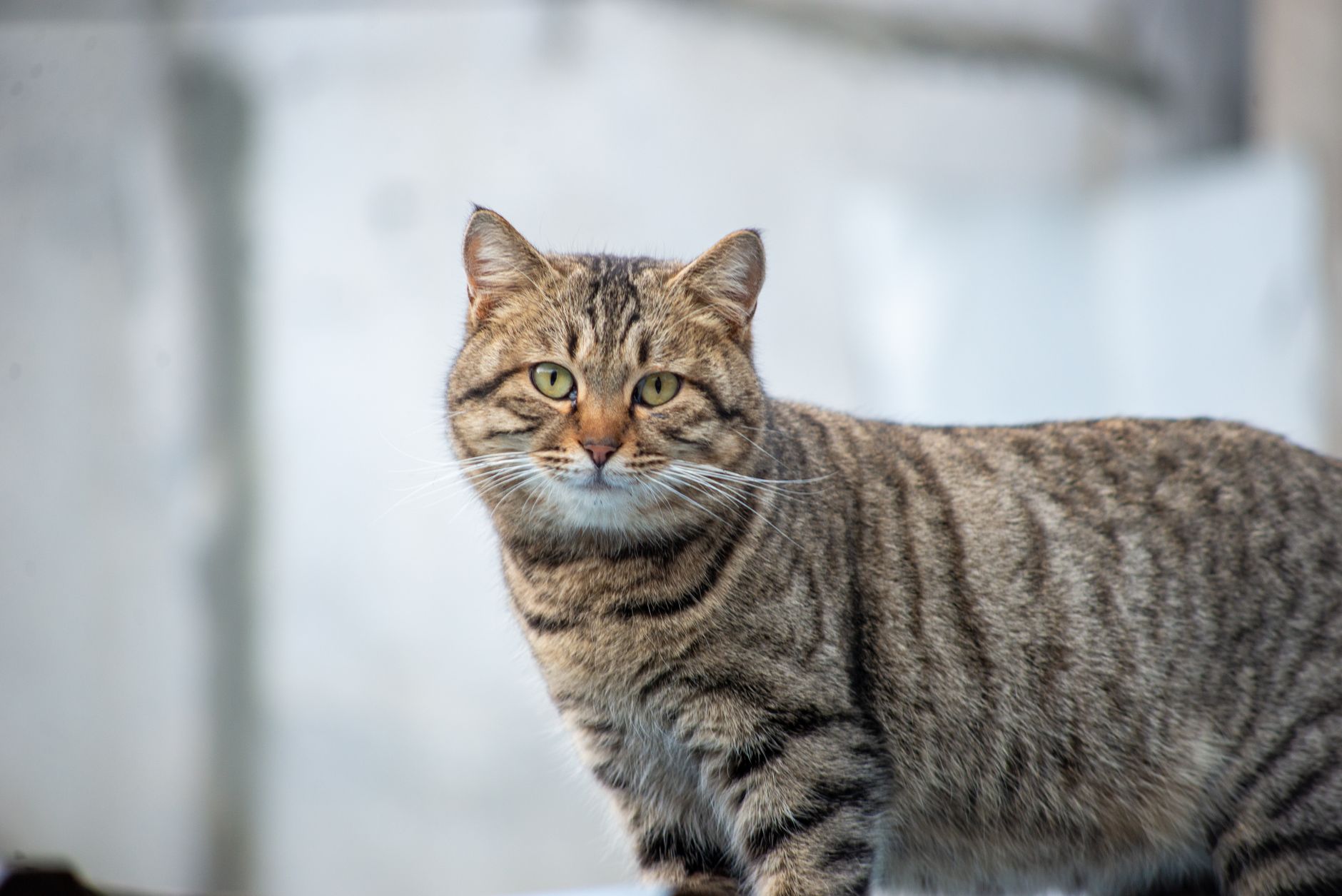
The Complete Guide to Natural Cat Health
Meow! It’s me, Sachat. And before you even put down your cup of coffee, let me tell you something: I’ve spent a good part of my life watching humans pick kibble with names nobody can pronounce, shampoos with questionable scents, and chemical medicines for little ailments that could have been sorted out with a bit of nature. The result? Cats who aren’t really thriving. Cats who survive rather than truly live.
So today, I’m rolling up my paws and giving you the complete guide to natural cat health: food, care, plants, supplements, overall well-being. Everything you need to know so your feline purrs with happiness, naturally.
Whether you already have one paw in the natural world or you’re starting from scratch, this article is for you. And for your cat, of course. 🐾
1. Why go for natural health for your cat?
Let’s be honest: nature got it right. The cat is a strict carnivore, a predator shaped by millions of years of evolution. Its body is built to hunt, digest raw meat, groom itself with grass and heal with what the earth has to offer.
Except that, well, industrialisation came along. And with it came ultra-processed kibble, chemical parasite treatments slapped on every month, and medicines pulled out at the slightest sneeze. I’m not saying conventional veterinary medicine is useless, far from it. But I am saying we can do much better day to day, and in a far gentler way.
The reasons to turn to natural cat health are concrete:
- ✅ Fewer chemical substances building up in the body
- ✅ A naturally stronger immune system
- ✅ Better digestion and a more stable healthy weight
- ✅ A shinier coat, brighter eyes
- ✅ An overall calmer, more balanced cat
And no, it’s not magic. It’s just plain feline common sense. 😼
2. Natural cat food: the foundation of everything
If you remember just one thing from this article, let it be this: everything starts in the bowl. Natural cat food is pillar number one of feline well-being. Full stop.
The cat is a strict carnivore, not an omnivore
Your cat is not a little dog. It can’t synthesise certain essential amino acids like taurine, arginine or niacin. It needs to find them in its food. And guess where they’re found? In meat. The real stuff. Not in grains, not in legumes, not in the trendy sweet potatoes.
A cat fed a diet low in quality animal protein is a cat that ages badly, that develops kidney disease, urinary problems, diabetes. The list is long and sad.
The options for natural cat food
There are several ways to adopt a natural cat diet:
🥩 BARF (Biologically Appropriate Raw Food)
This is the raw diet, made up of raw meats, meaty bones, organ meats, and sometimes a little veg and herbs. It’s what comes closest to what a wild cat eats. The benefits are impressive: better digestion, cleaner teeth, a superb coat. But beware, it takes real discipline to balance the nutrients.
🍖 Quality wet food
If BARF feels too complicated (and that’s totally normal!), start by choosing premium wet foods with a high meat content (at least 70-80%), no grains, no added sugars, no colourants. Read the labels as if your life depended on it, well, as if your cat’s life depended on it.
I recommend ranges like Almo Nature HFC – Amazon or Cosma Nature – Zooplus, which offer ultra-natural single-protein recipes.
🫧 Hydration: the absolute priority
The cat has a weak thirst drive, it’s evolutionary, it was meant to hydrate through its prey. As a result, a cat fed exclusively on kibble is often in a state of mild chronic dehydration. That’s a major factor in urinary and kidney problems.
Natural solutions: go for wet food (70% water), set up a water fountain (cats love running water), and if your cat eats kibble, rehydrate it with a little warm water.
Natural kibble: does it really exist?
Yes! But you need to know how to read the labels. A good natural kibble for cats means:
- First protein source: a named meat (chicken, salmon, turkey)
- Crude protein level: at least 35-40%
- Grain-free or with grains in very small amounts
- No artificial colourants, no chemical preservatives (no E320, E321)
- With natural prebiotics (chicory, for example)
The brands Orijen Cat – Amazon and Acana – Amazon are solid references in this area.
3. Natural daily care
Natural cat health is also about how you care for your cat from the outside. And here too, nature has plenty of resources to offer.
Natural grooming
The cat grooms itself, that’s true. But it sometimes needs a helping hand, especially long-haired cats or seniors. Avoid shampoos loaded with silicones and synthetic fragrances. A cat’s sense of smell is 14 times more powerful than ours. What smells “pleasantly floral” to you is a sensory assault for your cat.
Go for natural cat shampoos with aloe vera – Amazon or gentle plant extracts. They clean effectively without irritating the skin or mucous membranes.
Natural dental care
Dental trouble is the silent scourge of indoor cats. Tartar, gingivitis, pain, and often the first signs go unnoticed because cats are masters at hiding their pain (feline pride, you know).
Natural cat care for the teeth includes:
- Raw meaty bones (chicken, turkey) that act as a natural toothbrush
- Natural dental sprays with neem extract – Amazon
- Natural dental treats made with herbs
- Regular brushing with a soft toothbrush and a natural enzymatic toothpaste – Amazon
Natural parasite management
Fleas, ticks, worms, the nightmare. But before reaching for a powerful chemical parasite treatment every month, know that there are effective natural alternatives for cats when it comes to prevention.
- Brewer’s yeast: makes the smell of blood less attractive to fleas. Sprinkle it on the food.
- Diluted neem oil: a natural repellent for external parasites. Mind the dilution!
- The natural flea collar – Amazon: a gentle alternative to classic chemical anti-parasite collars.
- Vacuuming regularly plus washing bedding at 60°C: the non-negotiable basics.
4. Plants and essential oils: what heals and what kills
Ah, plants. What a vast subject. And what a minefield for our feline friends. Because while some plants can do your cat good, others can be fatal. And that’s where a lot of well-meaning owners make serious mistakes.
🌿 Plants that are TOXIC to cats (to ban completely)
Let’s pick up where we left off. Because this list, my human friends, is as long as my claws after a week without a scratching post. Hang on, this one matters.
| 🌱 Plant | ⚠️ Danger level | 😿 Possible symptoms |
|---|---|---|
| Aloe vera | 🔴 Moderate to high | Vomiting, diarrhoea, tremors, red-orange urine |
| Lily (all varieties) | 🔴🔴 EXTREMELY DANGEROUS | Acute kidney failure, death possible within 24-72h |
| Tulip | 🔴 Moderate | Excessive drooling, vomiting, depression |
| Dieffenbachia | 🔴 High | Mouth burns, swollen tongue, difficulty swallowing |
| Philodendron | 🔴 Moderate to high | Mouth irritation, vomiting, breathing difficulties |
| Azalea / Rhododendron | 🔴🔴 Very high | Vomiting, bradycardia, hypotension, coma |
| Ficus | 🟡 Moderate | Skin and digestive irritation, allergic reactions |
| Lily of the valley | 🔴🔴 Very high | Serious heart problems, vomiting, convulsions |
| Poinsettia | 🟡 Low to moderate | Mouth irritation, drooling, mild vomiting |
| Eucalyptus | 🔴 High | Drooling, vomiting, neurological depression |
| Grapes / Raisins | 🔴🔴 EXTREMELY DANGEROUS | Acute kidney failure, even in small amounts |
| Garlic / Onion / Chives | 🔴 High | Haemolytic anaemia, weakness, high heart rate |
🚨 A warning from Sachat!
Notice something off with your cat after contact with a plant? Vomiting, tremors, listlessness, heavy drooling? Don’t wait. Call your vet or the veterinary poison control centre immediately. I speak from experience: better a false alarm than a tragedy.
🧴 Essential oils and cats: a complicated relationship
I’ll be straight with you, as usual: essential oils and I have a tense history. What humans love to diffuse in their living room to “create a zen mood” can literally poison us cats.
🔬 Why do cats react so badly to essential oils?
Our liver is fundamentally different from yours. We lack a key liver enzyme, glucuronyl transferase, which lets the body metabolise and eliminate certain chemical compounds. The result? What your body processes in a few hours, mine accumulates until it reaches toxicity.
The compounds most problematic for us:
- 🌿 Phenols (found in oregano, clove, thyme, cinnamon)
- 🌿 Monoterpenes (pine, turpentine, citrus)
- 🌿 Ketones (peppermint, sage, hyssop)
- 🌿 Aldehydes (cinnamon, lemongrass, lemon balm)
🚫 Essential oils to ban completely around a cat
| 🧴 Essential oil | ☠️ Risk |
|---|---|
| Tea tree | 🔴🔴 Extremely toxic, neurological damage, paralysis |
| Peppermint / eucalyptus | 🔴 Respiratory distress, nervous depression |
| Lavender (in heavy diffusion) | 🟡 Moderate, nausea, excessive drowsiness |
| Cinnamon / Clove | 🔴 Severe irritation, liver problems |
| Citrus (orange, lemon, grapefruit) | 🔴 Digestive and neurological problems |
| Ylang-ylang | 🔴 Hypotension, breathing difficulties |
💡 Sachat’s tip:
You love aromatherapy and don’t want to give it up? Diffuse only in a closed room your cat can’t get into, air it out well afterwards, and never put oily products on my fur or skin. And forget for good the idea of treating my fleas with tea tree.
5. The natural supplements that are genuinely useful (tested by Sachat in person)
Right, I could have carried on with my nap on the radiator, but no. I decided to talk to you about natural supplements for cats because, honestly, it’s a topic where a lot of nonsense gets thrown around online.
5.1 Omega-3s: the great classic
If I had to recommend a single supplement for your cat, this would be the one. Omega-3s (EPA and DHA found in fish oil) work on:
- ✔️ Coat quality (shiny, soft, less shedding)
- ✔️ Joint health (great for seniors)
- ✔️ Reducing chronic inflammation
- ✔️ Supporting the cardiovascular system
- ✔️ Skin health (goodbye itching)
👉 Organic salmon oil for cats – Amazon: cold-pressed, additive-free, with a built-in dispenser. A drizzle on the bowl and you’re sorted.
5.2 Probiotics and prebiotics
A cat’s gut microbiome is its second brain. A cat whose gut flora is all over the place is a cat that feels off. When should you use probiotics?
- After a course of antibiotics
- For soft stools or occasional bouts of diarrhoea
- During a change of food
- In periods of stress (moving house, a new companion, etc.)
👉 Feline probiotic supplement – Amazon: a fine powder with no strong taste, to sprinkle straight onto the food.
💡 Sachat’s tip: For fussy cats, mix the powdered probiotic into a dab of wet food or a spoonful of homemade salt-free chicken broth. Goes down a treat.
5.3 Brewer’s yeast: the cat’s beauty supplement
Rich in B vitamins, zinc and plant proteins, it works directly on the quality of the coat and claws. Most cats love the slightly savoury taste.
👉 Organic brewer’s yeast flakes – Amazon: with no active yeast, packaged in a handy resealable format.
5.4 Adaptogenic plants for stressed cats
Valerian, passionflower, ashwagandha at a very low dose. These plants, in formulations made specifically for cats, can help anxious felines. Careful: never self-medicate with plants meant for humans.
👉 Natural plant-based calming spray – Amazon, or Feliway Classic diffuser on Zooplus: spray it on the litter box or bed, not directly on the cat. Visible results in 24 to 48h.
5.5 Spirulina
This micro-algae is a little nutritional bomb: iron, beta-carotene, complete proteins, antioxidants. It supports immunity and helps convalescent cats recover faster. Recommended dose: a quarter teaspoon maximum per day.
👉 Organic spirulina powder for animals – Amazon: formulated additive-free with a suitable measuring scoop.
6. Overall cat well-being: what natural food can’t do on its own
You can give your cat the best natural food in the world, but if its environment is stressful, if it doesn’t play enough, if it feels lonely, it will still be unhappy. Natural cat health is a whole-cat approach. Body AND mind.
6.1 The environment: your cat’s playground
- 🏔️ Verticality: a cat tree, dedicated shelves, perches.
- 🌿 Cat grass: catnip or classic cat grass (sprouted oats, wheat).
- 🎯 Daily play sessions: at least 2 x 10 minutes.
- 🛁 A clean litter box: a dirty litter box is like having a blocked toilet at home.
- 🌞 Natural light: a sunny spot by the window, the best feline antidepressant.
6.2 Hydration: the fight of my life
Cats don’t drink enough. We’re descendants of desert cats, genetically programmed to draw water from our food.
- 💧 Add wet or moist food at least once a day
- 💧 Use a water fountain: running water naturally draws cats in
- 💧 Offer homemade salt-free chicken broth, slightly warmed
- 💧 Place several water bowls in different spots around the house
👉 Silent ceramic water fountain – Amazon, or Catit Pixi ceramic fountain on Zooplus: quiet, filtering, and pretty enough for the living room.
6.3 Coat and skin care, the natural way
A cat’s coat is the mirror of its inner health. A dull coat shedding in industrial quantities is often the sign of a deficiency or a dietary imbalance.
- 🪮 Regular brushing with a natural soft-bristle brush
- 🛁 A natural dry shampoo based on clay or rice flour
- 🌿 99% pure aloe vera to soothe minor surface skin irritations
💡 Sachat’s tip: Notice your cat frantically licking one specific spot? Before the chemical flea products, first check whether it isn’t a food allergy. Novel proteins (duck, rabbit) plus a probiotic supplement often clear these problems up in a few weeks.
6.4 Managing stress: the great silent enemy
Stress in cats is sneaky. Recurring urinary infections, digestive trouble, stress-related hair loss, sudden aggression, a lot of health problems start with stress.
Natural approaches to reduce your cat’s stress:
- 🎵 Classical music or special cat frequencies (dedicated playlists on streaming platforms)
- 🌿 Bach flower remedies for animals (Rescue Remedy diluted in water)
- 🏠 Hideaways and rest zones accessible at all times, a cat that can retreat is a less stressed cat
- 🎮 Activity toys to mentally stimulate indoor cats
7. My natural favourites (approved by my little paws)
🌿 Product #1, Organic salmon oil for cats
The omega-3 superstar. Shiny coat, supported joints, improved digestion. A few drops on the bowl in the morning, visible results in a few weeks.
- ✅ Rich in EPA and DHA · Additive-free · Ideal for seniors and long-haired cats
👉 Discover organic salmon oil for cats – Amazon, or Salmon oil on Zooplus
🌼 Product #2, Valerian & lemon balm calming supplement
For anxious cats. A zen effect without turning them into zombies. Handy for travel, vet visits, house moves.
- ✅ Non-habit-forming · Specially dosed for cats · Tablets or drops
👉 See the valerian & lemon balm supplement for cats – Amazon
🦷 Product #3, Natural mint dental gel
Fluoride-free, alcohol-free, no artificial colourants. Reduces plaque and tartar. Easy to apply with a finger.
- ✅ Natural antibacterial action · Appetising flavour · Suited to regular hygiene
👉 Order the natural dental gel for cats – Amazon
🌱 Product #4, Organic cat grass
Helps eliminate swallowed hair, eases digestion, provides natural fibre. Organic means zero pesticides.
- ✅ Reduces hairballs · Stimulates appetite · Grow-your-own kit or ready-to-use pot
👉 Find organic cat grass for your feline – Amazon
🛁 Product #5, Natural rinse-free dry shampoo
For cats who hate water (which is nearly all of us). Made with white clay and aloe vera. It absorbs sebum, removes odours, and leaves the coat lovely and soft.
- ✅ Sulphate-free and paraben-free · Ideal for sick or senior cats · Quick to apply
👉 See the natural dry shampoo for cats – Amazon
💊 Product #6, Natural probiotics for cats
Balances the gut flora, improves digestion, strengthens immunity. Especially useful after a course of antibiotics or during a change of food.
- ✅ Lactose-free, gluten-free · Carnivore-specific strains · Easy to mix into food
👉 Discover natural probiotics for cats – Amazon
8. FAQ, the questions you’re asking about natural cat health
❓ Question 1: Can natural remedies replace the vet?
No. Natural approaches are complementary to veterinary medicine, not a substitute. If your cat shows unusual signs, prolonged loss of appetite, lethargy, difficulty urinating, repeated vomiting, you go to the vet. Full stop. Natural care is perfect for maintaining daily well-being and for prevention.
❓ Question 2: Are essential oils really dangerous for cats?
Many of them, yes. Really. Our liver lacks a key enzyme to metabolise many aromatic compounds. Tea tree, eucalyptus, peppermint, lavender in high concentration, citrus, cinnamon, clove: to be avoided completely around cats.
❓ Question 3: What natural food is genuinely suited to a cat?
The cat is a strict carnivore. A suitable natural diet means: mostly quality animal protein, wet or raw food that provides hydration, little or no grains, and omega-3 and taurine supplements if needed.
❓ Question 4: Can my cat take natural supplements every day?
Yes, and for some it’s even recommended! Supplements like brewer’s yeast, omega-3s or probiotics can fit into the daily routine. The key: stick to the doses and choose products formulated specifically for cats. When in doubt, ask your vet.
❓ Question 5: Are essential oils safe for cats?
Most essential oils are toxic to us. Our liver can’t metabolise certain compounds like phenols or terpenes. Tea tree, eucalyptus, lavender in heavy diffusion, a real danger. If you use a diffuser, air the room well, never run it in a closed space, and always leave your cat the option to leave the room. 🐾
🐾 In short: take care of your cat, naturally
Your cat’s natural health isn’t a trend, it’s a real lifestyle choice, for your cat, and a bit for you too. Between suitable food, gentle care, the right supplements and constant vigilance, you have all the tools to give your feline a long, healthy and happy life. And trust me, a cat that feels good purrs loud. 😸 Want to go further? Find all my well-being advice, my favourite products and my practical guides on lechatheureux.com, there’s plenty to read, and your cat is well worth it!
Purrs, Sachat 🐾
Frequently Asked Questions
How do I keep my cat healthy naturally?
A protein-rich diet, good hydration, a balanced gut flora, daily play, low stress and regular veterinary care (vaccines, worming) are the pillars of lasting feline health.
Which natural remedies are safe for cats?
Valerian, matatabi, chamomile, brewer's yeast, omega-3 and probiotics are safe and helpful. By contrast, most essential oils are toxic to cats.
When should I see a vet rather than use a natural remedy?
As soon as there is fever, blood, repeated vomiting, refusal to eat for more than 24 hours, difficulty urinating or lethargy. Natural care is preventive, never a substitute for a veterinary diagnosis.