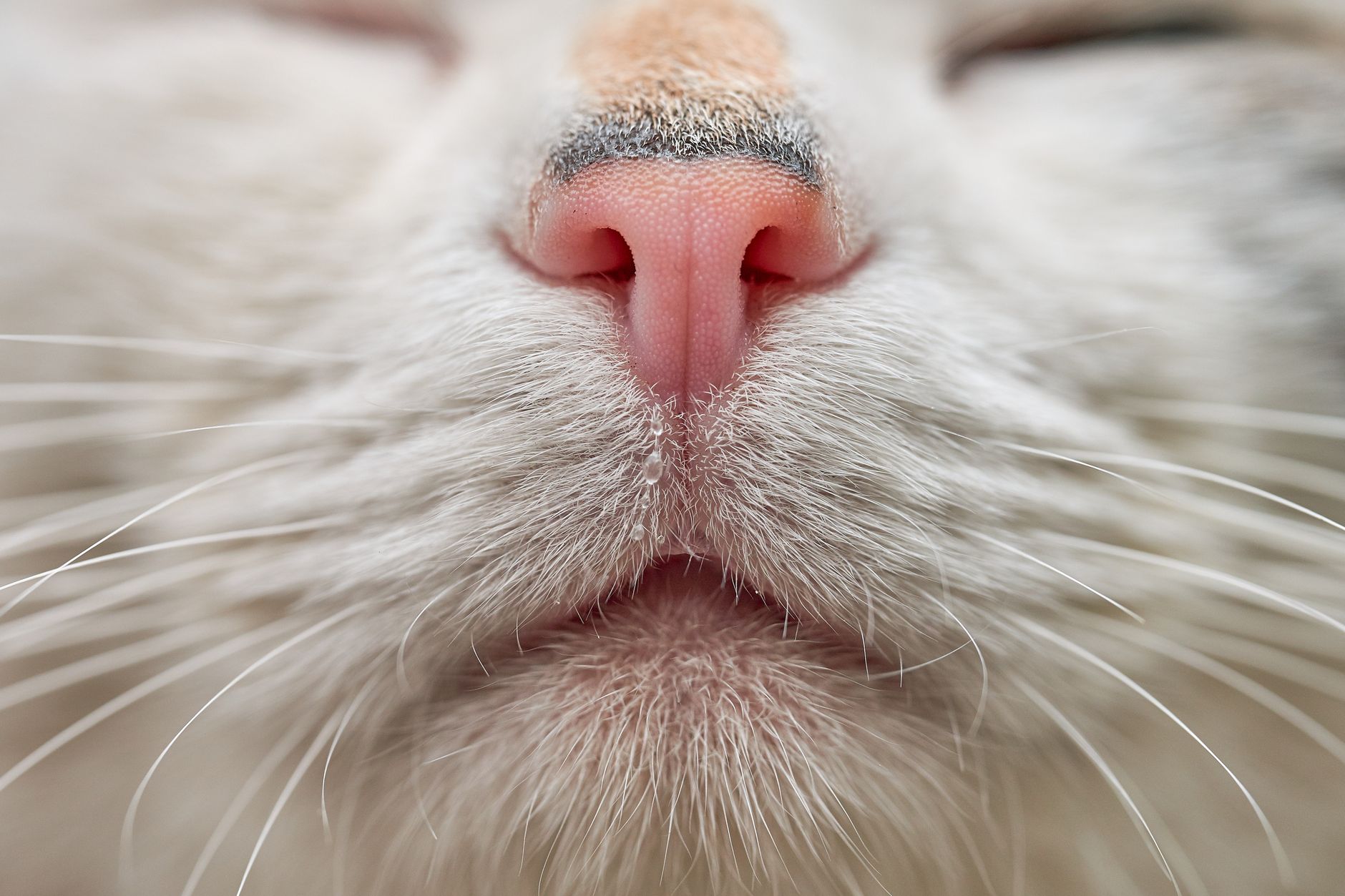
Achoo. You heard that adorable little sound come out of my nose, and your heart skipped a beat. Let me reassure you straight away: a cat’s sneeze is often as harmless as a speck of dust tickling my nostrils. Me, Sachat, I sometimes sneeze in bright sunshine or when you run the hoover. Nothing dramatic. But when it happens again and again, day after day, that is when you need to keep your eyes open. I will explain everything: why we cats sneeze, what you can do at home, and above all the precise moment when you should stop tinkering and book an appointment with the vet. Settle in, I will purr while you read.
Why My Cat Sneezes: The Most Common Causes
A sneeze is simply my body expelling something that has no business being in my nose. Most of the time it is completely harmless. But because the causes all look the same (I sneeze, full stop), your job is to observe the context around it.
Everyday irritants
My nose is a tiny marvel of sensitivity. Dust, cigarette smoke, air fresheners, candles, sprays, litter that is too dusty when I dig, pollen drifting in through the window: all of it can set me off in a fit of sneezes. If I only sneeze at certain moments (after a trip to my tray, or when you light a candle), you have probably found your culprit.
Respiratory infections
Here we step things up a notch. We cats are prone to viruses and bacteria that attack the upper respiratory tract. The best known is cat flu, a cocktail of viruses and bacteria that turns me into a little creature who sniffles, weeps and sneezes non-stop. Cat flu is not just a passing cold: it is a genuine illness that calls for a vet. I will come back to it below, it is important.
The other possible causes
Sometimes it is more unexpected: a blade of grass or a foreign body stuck in a nostril, inflamed gums or an infected tooth root (the roots of my upper fangs sit right beneath my sinuses), an allergy, and more rarely polyps or a mass. No need to panic, though: these cases are in the minority. But they explain why a vet remains the only one who can give a proper diagnosis.
How to Clean Up the Air in Your Home
Before setting off on a medical mission, start with the simplest thing: my environment. In 80 per cent of occasional sneezing, the ambient air is to blame. And the good news is that you control almost all of it.
First things first, hunt down the irritants. We stop the scented sprays, the essential oil diffusers (some are downright toxic for me) and the cigarettes in the rooms where I live. We air the place out every day, even just five minutes in winter. We dust the surfaces where I curl up.
Next, if you live in town, in a dry home or somewhere with plenty of particles in the air, a home air purifier – Amazon really does make a difference. It filters out dust, pollen and fine particles, and my little nose thanks you for it. Place it near my favourite napping spot, not in an empty room.
The Litter Tray, a Culprit We Always Forget
I spend part of my day with my nose hovering over my tray. So if my litter kicks up a cloud of dust every time I scratch, guess what: I breathe it all in, deep into my lungs. Many cheap mineral litters are veritable dust factories.
The clever move is to switch to a low-dust plant-based litter. A Cat’s Best plant-based litter – Amazon clumps well, holds odours in and throws up far fewer particles when I dig my little hole. Pour it to a sensible depth, keep the tray somewhere well ventilated, and watch: tray-related sneezing often disappears within a few days.
Soothing My Nose and Eyes at Home
When my nose is running or my eyes are a bit gummed up when I wake, you can give me real comfort without playing doctor. The watchword: gentleness and cleanliness.
Keep my nose and the corners of my eyes clean with pet care wipes – Amazon, dampened with lukewarm water. You dab gently, you never rub, and you use a clean wipe for each eye so you do not shuttle germs from one side to the other.
Another clever cat trick: humidity. Slightly humid air thins out my secretions and helps me breathe more easily. You can take me into the bathroom for a few minutes while you run a hot shower, with the door closed. The steam clears my little nose, with no product needed. And of course, you make sure I keep drinking and eating: a cat with a cold who cannot smell anything sometimes loses its appetite, and that is something to keep a close eye on.
When You Need to Head to the Vet
Here is the most important section, so read it twice. An isolated sneeze, now and then, with no other symptoms: we stay calm. But certain signals are non-negotiable and call for a vet visit.
- Sneezing that persists for several days in a row without improving: this is the classic picture of cat flu, which can be treated, but with a vet.
- A coloured discharge (yellow, green) from the nose or eyes, or any blood.
- Swollen, red, gummed-up eyes or eyes that are half closed.
- Loss of appetite, tiredness, a fever (I hide away, I sleep all the time).
- Difficulty breathing, unusual sounds, an open mouth: this is an emergency, we do not hang about.
- Violent, sudden sneezing while frantically pawing at the nose: a possible foreign body.
I will say it clearly again, because it is crucial: I am only a cat full of good advice, not a vet. No home remedy replaces a proper diagnosis. Cat flu in particular can leave lasting damage if it is neglected, and the earlier you act the better it responds to treatment. When doubt creeps in, we book an appointment, full stop.
FAQ
My cat sneezes several times a day, is that serious?
Not necessarily. If I am lively, eating, playing and have no discharge or weepy eyes, it is probably an irritant in the air or in the litter. Clean up my environment and watch for a few days. But if the sneezing persists beyond 2 to 3 days or comes with other symptoms, off to the vet.
Can I give my cat a human medicine?
Absolutely not. Many human medicines (especially cold remedies) are toxic, even fatal, for us. We never give anything without a vet’s advice, not even a tiny dose.
Is cat flu contagious to my other cats?
Yes, cat flu spreads easily between cats through secretions and sneezing. If you have several felines at home, isolate the sick one as much as you can and talk to the vet about it. Vaccination also helps to prevent it and to limit how severe it gets.
Is an air purifier enough to fix the problem?
It helps a great deal when the cause is environmental (dust, pollen, dry air), and it is a real bonus day to day. But it does not cure an infection. If the cause is medical, the purifier improves my comfort without replacing the treatment.
Purrs, Sachat 🐾