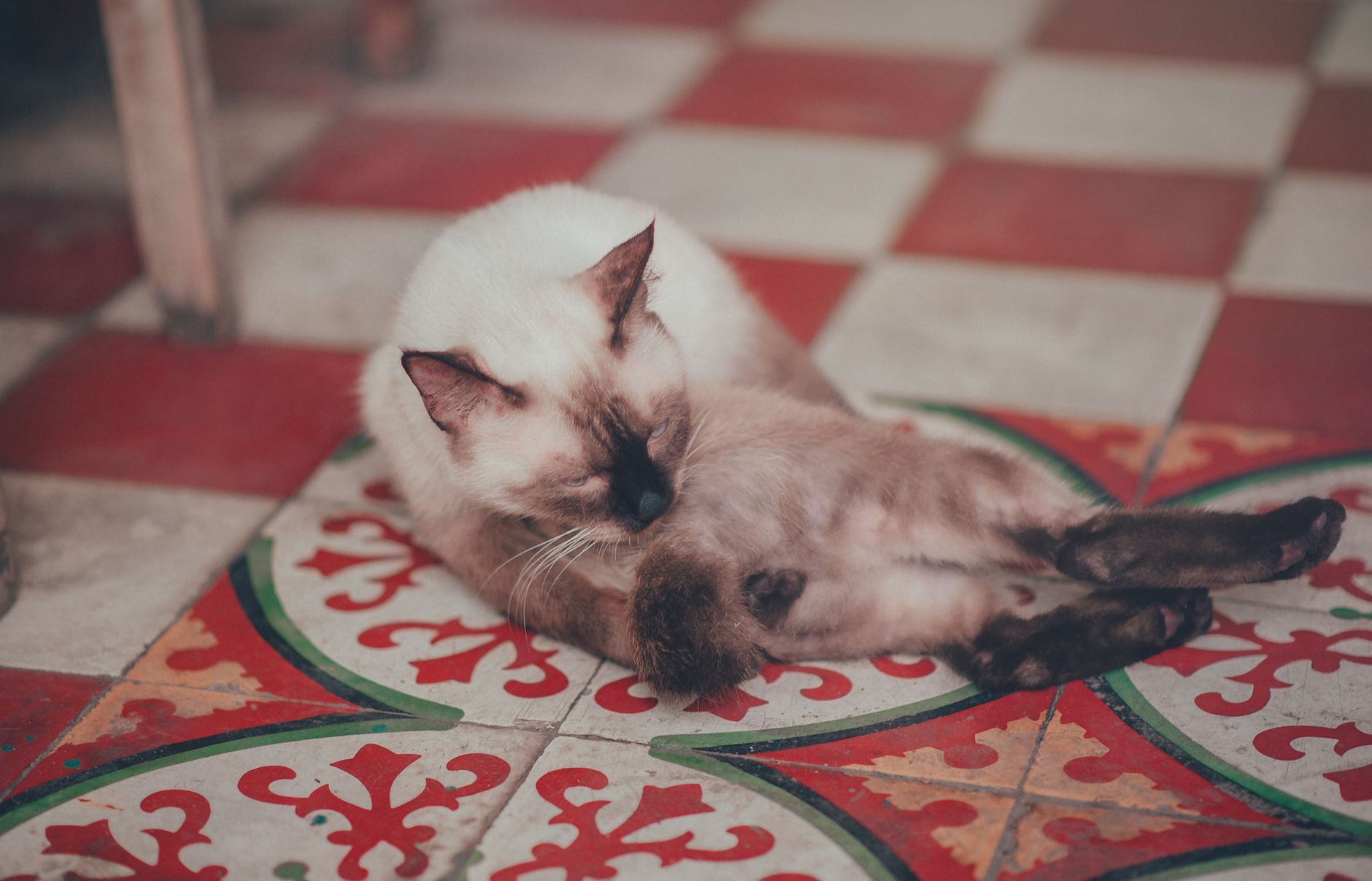
Hello, it’s Sachat. See me here, stretched out at full length on the cool tiles by the front door, fleeing the sofa in full sun? It isn’t laziness (well, not only that). It’s a survival instinct. Because however much we adore the heat, we cats are very poorly equipped to get rid of excess body temperature. And when it spills over, it’s called heatstroke, and it’s a genuine veterinary emergency. Not a little dip in form. An emergency. Today I’ll explain how to avoid getting to that point, and what to do if it ever happens.
Why heatstroke is so dangerous for us
The first thing to understand: we barely sweat at all. Our only sweat glands are under our paw pads, which is to say next to nothing. To cool down, we have two tools: licking ourselves (the saliva evaporating cools us a little) and panting. Except that panting, in a cat, isn’t normal at all. A dog panting, perfectly ordinary. A cat panting is already a serious warning signal.
Heatstroke is when our body temperature climbs beyond what the body can handle. Normally we sit around 38 to 39 °C. Above 40 °C, the trouble begins: the organs suffer, the brain, the kidneys, the digestive system. It can happen very quickly and become fatal within a few dozen minutes. That’s why prevention isn’t a luxury, it’s safety.
The cats most at risk
We’re not all equal in the face of heat. Some of my fellow cats need watching more closely:
- Elderly cats and kittens, who regulate their temperature less well.
- Flat-faced breeds (Persian, Exotic Shorthair): their squashed muzzle makes panting far less effective.
- Overweight cats, who heat up faster and struggle to cool down.
- Poorly cats (heart, respiratory or kidney problems) or those on certain treatments.
- Long-haired or very dense-coated cats, who wear a proper coat all year round.
If your cat ticks one of these boxes, be doubly vigilant as soon as the thermometer rises.
Prevention: my anti-heat reflexes
Water, everywhere, all the time
A dehydrated cat tips into heatstroke far more quickly. Multiply the water points around the house, change the water often so it stays fresh and appealing. Many of us prefer water nicely presented in a material that doesn’t give that plastic taste: a ceramic bowl – Amazon keeps water fresher for longer and encourages us to drink more. And in summer, don’t hesitate to offer wet food rather than all kibble: that’s extra water in the bowl.
A home that stays cool
Close the shutters during the hottest hours, create draughts in the morning and evening, always keep a cool room accessible (the famous tiles by the front door, my summer HQ). Avoid shutting us in a conservatory or a room that turns into an oven. If the air in your home is heavy and stuffy, an air purifier with ventilation – Amazon can help stir and freshen the atmosphere, provided you never aim a continuous blast of air directly at us.
Lighten our coat
A coat full of dead hair traps heat like a winter duvet jacket. Regular brushing during the moulting season removes that undercoat and helps us cool down better. A few strokes with a brush suited to cats – Amazon two or three times a week in summer, and believe me, we breathe more easily. Be careful, though: never clip us without veterinary advice, our coat also plays a protective role against the sun.
The golden rule: never shut in a car
I’ll say it again because it’s vital: NEVER leave a cat (or any animal) alone in a car, even for a few minutes, even in the shade, even with the windows ajar. The cabin turns into a deadly oven in record time. The same goes for a carrier left in the sun or a balcony with no shaded area. It’s the most common and most preventable cause of heatstroke.
Recognising the signs: act fast
Spotting it early means saving a life. Here are the signals that should alert you, from the mildest to the most serious:
- Panting, rapid breathing, mouth open: already abnormal in a cat.
- Listlessness, lethargy, the cat desperately seeks the cool and stops moving.
- Drooling, excessive salivation, very red gums or, on the contrary, pale ones.
- Vomiting, diarrhoea, a staggering gait, disorientation.
- Trembling, convulsions, loss of consciousness: critical stage.
At the very first signs, don’t tell yourself it’ll pass. Heatstroke worsens within minutes.
What to do in case of heatstroke
Heatstroke is an absolute veterinary emergency. While you reach your vet or the emergency clinic (call them right away to be guided), here are the right things to do:
- Place the cat somewhere cool and airy, in the shade.
- Dampen their coat with cool, not icy water: water that’s too cold causes thermal shock and tightens the blood vessels, which makes things worse. Wet the belly, the paw pads and the inner thighs in particular.
- Offer them cool water to drink if they’re conscious, without ever forcing them.
- Fan them gently to encourage evaporation.
- Head to the vet without delay, even if their condition seems to be improving. The internal damage (kidneys, blood clotting) can’t be seen with the naked eye and can appear several hours later.
I’ll say it again clearly: none of these actions replaces a consultation. Only a vet can assess the true severity and treat what’s happening inside. Your role is to buy time and get them there quickly.
FAQ
At what temperature does a cat risk heatstroke?
There’s no magic threshold, it depends on the humidity, the ventilation and the cat’s condition. But as soon as the house becomes stifling or it’s very hot and humid outside, vigilance is called for, especially for elderly, overweight or flat-faced cats. The danger comes as much from the humidity as from the raw temperature.
My cat pants after playing, is that serious?
Brief panting after a big play session or a fright can happen, but it should stay rare and stop quickly. If the panting persists, comes back often, or comes with listlessness, it isn’t normal: off to the vet, because it can also hide a respiratory or heart problem.
Can I put my cat in cold water to cool them down fast?
Definitely no icy water and no abrupt bath. The cooling must be gradual with cool (not cold) water, otherwise you cause a dangerous thermal shock. Gently dampen the coat and the belly, and let the vet take over.
Is a fan or air conditioning good for my cat?
It helps cool the room, yes, but never aim a continuous flow of icy air straight at us. The ideal is a cool, ventilated room we can come and go from as we please, with fresh water available. We choose the right spot ourselves.
There you go, you know the essentials. The heat, we love watching it through the window, but we can’t protect ourselves from it on our own. You’re our safeguard: fresh water, shade, an attentive eye on the signs, and the immediate vet reflex if things go off the rails. With that, we’ll spend the summer purring rather than suffocating.
Purrs, Sachat 🐾