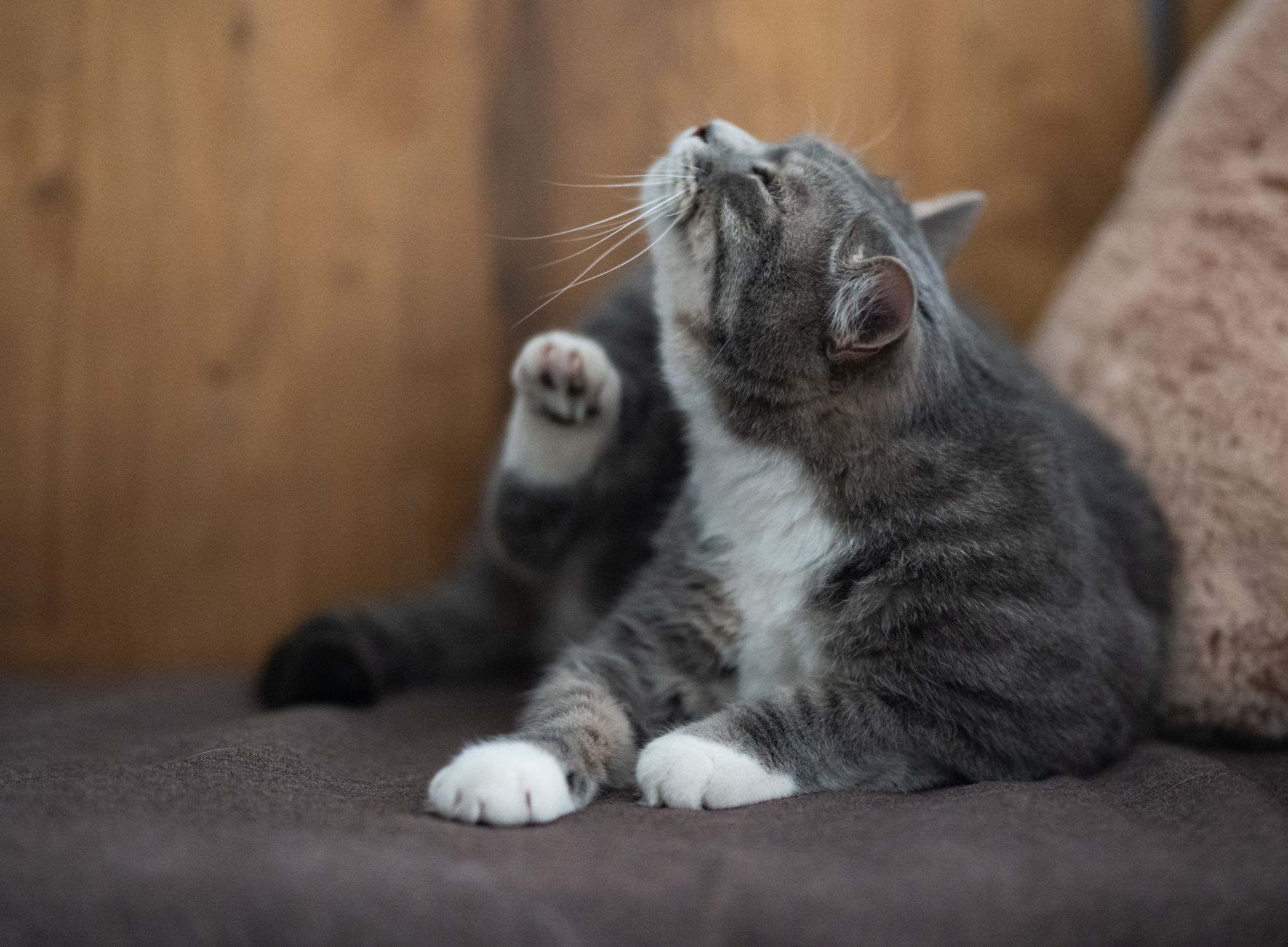
Cat allergies: how to spot them and treat them naturally
Let me tell you a story. Mine, actually. It was a lovely spring, lovely for humans, that is. For me, it was pure misery. I was scratching behind my ear every five minutes, my eyes watered like I was watching the end of Mufasa, and I sneezed so much my human thought I’d swallowed a pepper shaker. He looked at me with those big round eyes and said, “Sachat, you look really rough.” Thanks for the support.
After a few weeks of this circus, off to the vet we went. Verdict: an environmental pollen allergy. Me. An indoor cat. Allergic to spring. The ultimate irony.
And trust me, I’m far from a lone case. Allergies affect a sizeable chunk of my fellow felines, with some studies pointing to as many as 15% of house cats. Except, unlike humans who sneeze and move on, we can develop skin, digestive, or respiratory symptoms that often fly under the radar for months. The result: a suffering cat, a baffled human, and a whole lot of misunderstood scratching.
In this article, I’ll hand you all the keys to recognise, understand, and treat your cat’s allergies, leaning on natural approaches whenever possible. Get comfy (I’m already on the radiator), let’s begin.
The different types of allergy in cats
Before we talk symptoms and solutions, we need to talk vocabulary. Because “my cat has allergies” is a bit like saying “my car is making a weird noise”, it can mean a lot of very different things. There are four big families of allergy in cats:
1. Food allergy
This is one of the most common and most underestimated. Your cat can develop an allergy to a protein he’s been eating for years. Yes, it’s possible, an allergy can show up after long exposure. The usual culprits: chicken, beef, corn, wheat, dairy. Spoiler: low-grade kibble stuffed with cereals isn’t doing him any favours.
A food allergy can develop after years of eating the same food. Has your cat been eating chicken for 5 years with no problem? That doesn’t make him immune, it can actually sensitise him further.
2. Environmental allergy (atopy)
This is my own case. The immune system overreacts to particles in the environment: pollen, mould, dust mites, dander from other animals. It often starts out seasonal, then can turn chronic. A little-known classic.
3. Flea bite allergy (FAD)
Flea Allergy Dermatitis, or FAD, is probably the most widespread cause of allergy in cats. And the cruellest: it isn’t the flea itself that’s the problem, it’s the saliva it injects when it bites. A single flea is enough to trigger a massive reaction in a sensitised cat. If you see your cat scratching frantically at the base of the tail, you know what you have to do.
4. Contact allergy
Less common but very real. Some cats react to direct contact with irritating substances: scented litter, household cleaners, synthetic fabrics, cheap anti-parasite collars, certain plastics (yes, even the food bowl can be to blame). The symptoms appear wherever the skin touches the allergen, often the belly, the chin, the paws.
The symptoms to watch for
The trouble with feline allergies is that we cats don’t hand over a list of complaints. We suffer in silence, scratch away in our corner, and our human thinks we’re “just grooming”. Here’s what you should really keep an eye on.
Skin symptoms
- Intense, repetitive scratching (ears, neck, belly, base of the tail)
- Localised hair loss (alopecia), often symmetrical
- Redness, scabs, tiny bumps (miliary dermatitis)
- Thickened or scaly skin
- Weeping or infected patches (from the scratching)
Digestive symptoms
- Frequent vomiting (beyond the usual hairballs)
- Chronic diarrhoea or recurring soft stools
- Unusual flatulence
- Loss of appetite or a sudden disgust for a normally loved food
Respiratory symptoms
- Frequent sneezing
- Watery eyes, mild conjunctivitis
- Runny nose
- Slightly wheezy breathing (in cases of allergic asthma)
Unusual behaviour
- Excessive grooming to the point of self-harm
- Repeated rubbing of the face against furniture
- Increased irritability, retreating to cool spots
- Unexplained lethargy
💡 Golden rule: if your cat is scratching more than a few times an hour and it’s been going on for more than a week, it’s time to dig deeper.
Scratching so intense it causes open sores or patchy hair loss: that’s a vet emergency. Don’t wait for it to “sort itself out”.
The most common causes
Now that we know how to spot the symptoms, let’s see where they come from. Because treating without understanding the cause is like putting a plaster over a leaking pipe.
Dust mites
Dust mites love heated homes, fabrics, and mattresses. They’re invisible to the naked eye and present everywhere. An atopic cat can react violently to them, and it gets worse in winter when the windows are shut and the heating is cranked up.
Pollen
Yes, even indoor cats are exposed. Pollen comes in through windows, clothes, shoes. Spring allergy peaks in cats often line up with pollen season, and that’s no coincidence.
Certain food ingredients
The cursed trio: corn, wheat, and soy, three cereals that are everywhere in budget kibble yet of zero nutritional value for a strict carnivore like me. Add to that a few over-represented animal proteins: chicken, turkey, beef. Paradoxically, it’s the foods eaten in the largest quantities that most often trigger sensitisation.
Household and cleaning products
Disinfectants, scented sprays, candles, poorly chosen essential oils, bleach-based detergent, floor cleaners, all potential irritants. Our little paws walk over everything you clean. And we lick our paws. You see the problem.
Litter materials
Silica-based litter, scented “pine fresh” or “floral bouquet” litter, for an allergic cat, it’s a ticking time bomb. Artificial fragrance is a classic irritant.
How are allergies diagnosed?
Diagnosing an allergy in a cat is often detective work. There’s no miracle test that says “here’s your enemy”. Here’s how it actually plays out.
The vet consultation
This is the first step, non-negotiable. The vet will assess the symptoms, where they show up, how seasonal they are. They’ll first rule out other causes: parasites, fungal infections, infectious dermatitis. Don’t make the mistake of trying to self-diagnose your cat, allergy symptoms look like plenty of other things.
Allergy tests
There are two options: the blood test (serology), which measures immunoglobulin E against certain allergens, and the intradermal test (injected directly under the skin), considered more reliable. These tests have their limits and their false positives, but they give you a serious lead.
The elimination diet (for food allergies)
This is the gold standard for food allergies. The principle: you put the cat on a diet, for 8 to 12 weeks minimum, with a single protein source he’s never eaten before (duck, rabbit, venison, white fish…) and a single carbohydrate source. If the symptoms vanish, then come back when you reintroduce the old food, the diagnosis is confirmed. It’s long, it takes discipline, but it’s remarkably effective.
The logbook
Often underrated, yet very useful. Note the scratching episodes, how intense they are, what your cat ate, the products used at home, the weather. The patterns eventually emerge.
Write it down every day: what your cat ate, the itching you observed, the products used at home (detergent, sprays…), and the weather. After 2 weeks, patterns start to appear.
Natural anti-allergy solutions
Good news: you can do a lot to improve an allergic cat’s quality of life without jumping straight to corticosteroids (which are still sometimes necessary in severe cases, let’s be honest). Here’s what really works.
Omega-3 fatty acids
This is probably the best-documented natural solution. Omega-3s (EPA and DHA) have powerful anti-inflammatory properties. They strengthen the skin barrier, reduce itching, and limit allergic reactions. The sources: salmon oil, krill oil, cat-specific supplements. Allow 4 to 6 weeks before you see a noticeable effect, patience.
A grain-free diet, rich in animal protein
Cutting cereals out of the diet is often a first victory. Food high in quality animal protein, with no corn, no wheat, no soy, lowers the overall inflammatory load. Grain-free kibble or premium wet food makes a real difference over the long term.
Organic coconut oil
Applied in a very small amount to irritated areas, or mixed in micro-doses into the food (a quarter of a teaspoon at most), coconut oil has antimicrobial and soothing properties. Careful: some cats don’t tolerate it well digestively, so start with tiny amounts and watch how he reacts.
Cool compresses
To soothe areas of intense scratching, a cool water compress or a cooled chamomile infusion (no essential oil!) applied gently can calm the itching in the short term. Simple, safe, handy as a quick fix.
Reducing environmental allergens
Vacuuming more often with a HEPA filter, washing the cat’s bedding at 60°C, airing out the house early in the morning (when pollen levels are lower), avoiding scented candles and essential oil diffusers, simple habits that genuinely change things for an atopic cat.
Probiotics
The gut microbiome plays a key role in regulating the immune system. Recent studies suggest a healthy gut flora reduces allergic reactions. Cat-specific probiotics can help, especially with food allergies.
Don’t change everything at once. New food + new probiotic + new shampoo = no way to tell what’s working. One change a month, and you observe.
Products recommended by Sachat 🐾
A 100% natural pick, rated 4.5/5 minimum, that I recommend for managing allergies without harsh chemicals.
★ 4.6/5
✓ Natural
The essential foundation for allergic cats. Named meat as the first ingredient, no corn, no wheat, no soy. Protein content > 35%. Visible results on skin and coat in 4 to 6 weeks.
★ 4.6/5
✓ Natural
Salmon or krill oil dosed for felines, with concentrated EPA and DHA. Tested for heavy metals, packaged to protect against oxidation. Anti-inflammatory action on the skin visible in 3 to 4 weeks.
★ 4.5/5
✓ Natural
A contact allergen that often gets overlooked. Tofu litter (biodegradable) or natural silica removes the irritating dust and artificial fragrances that aggravate the airways and skin.
★ 4.5/5
✓ Natural
Organic, virgin, cold-pressed. Applied in a micro-amount to irritated areas to calm the itching, or added now and then to the food bowl for its gentle anti-inflammatory and antibacterial properties.
★ 4.5/5
✓ Natural
No artificial fragrance, formulated with colloidal oatmeal or aloe vera. Soothes the itching and washes away allergens settled on the coat. Use with lukewarm water and plenty of patience.
What to avoid at all costs
As important as the good habits are, the classic mistakes can make things worse. Let me list them for you, no sugar-coating:
- Giving human antihistamines without veterinary advice: some are toxic to cats. Diphenhydramine can be acceptable in certain cases, but only under supervision. Never do this on your own.
- Using essential oils on or near an allergic cat: essential oils are broadly contraindicated for felines. Tea tree, lavender, eucalyptus… stop. Even diffused.
- Changing the food abruptly: a transition that’s too fast worsens digestive trouble. Always over 7 to 10 days minimum.
- Using scented litter: it’s a direct irritant for the airways and the skin. Unscented litter, full stop.
- Waiting too long before consulting: an untreated allergy can progress to skin superinfections, chronic asthma, or permanent lesions. Intense scratching eventually damages the skin and opens the door to bacteria.
- Self-diagnosing based on the internet (yes, I know, that’s a bit rich coming from me): this article gives you leads, not a diagnosis. The vet remains irreplaceable.
Conclusion
Cat allergies are complex, sometimes frustrating, but very often manageable once you understand what’s going on. The most important thing is to observe your cat closely, not to normalise excessive scratching or recurring digestive trouble, and not to hesitate to consult a vet.
Since we pinpointed my pollen allergy and adjusted my diet with grain-free kibble and an omega-3 supplement, my life has changed. Less scratching, more peaceful naps, a coat I’m rather proud of. My human now calls me “Shiny Cat”, and honestly, he’s not wrong.
If you suspect your cat is suffering from allergies, start by noting the symptoms, how often they happen, where they show up. See a vet. And if a food lead emerges, don’t hesitate to try an elimination diet, it’s the most powerful natural solution out there for food allergies.
Your cat is counting on you to be his detective. And me, from my favourite radiator, I’m counting on you to give him the life he deserves. 🐱
Purrs, Sachat 🐾
Frequently Asked Questions
How do I know if my cat is allergic?
Common signs: itching, excessive licking, patches, hair loss, sneezing or digestive upsets. A vet can identify the allergen.
What causes allergies in cats?
Fleas, certain foods, pollens, dust mites and household products are the most common triggers.
How do I relieve an allergic cat naturally?
Remove the allergen, give omega-3 and keep a clean environment. Severe cases need veterinary treatment.