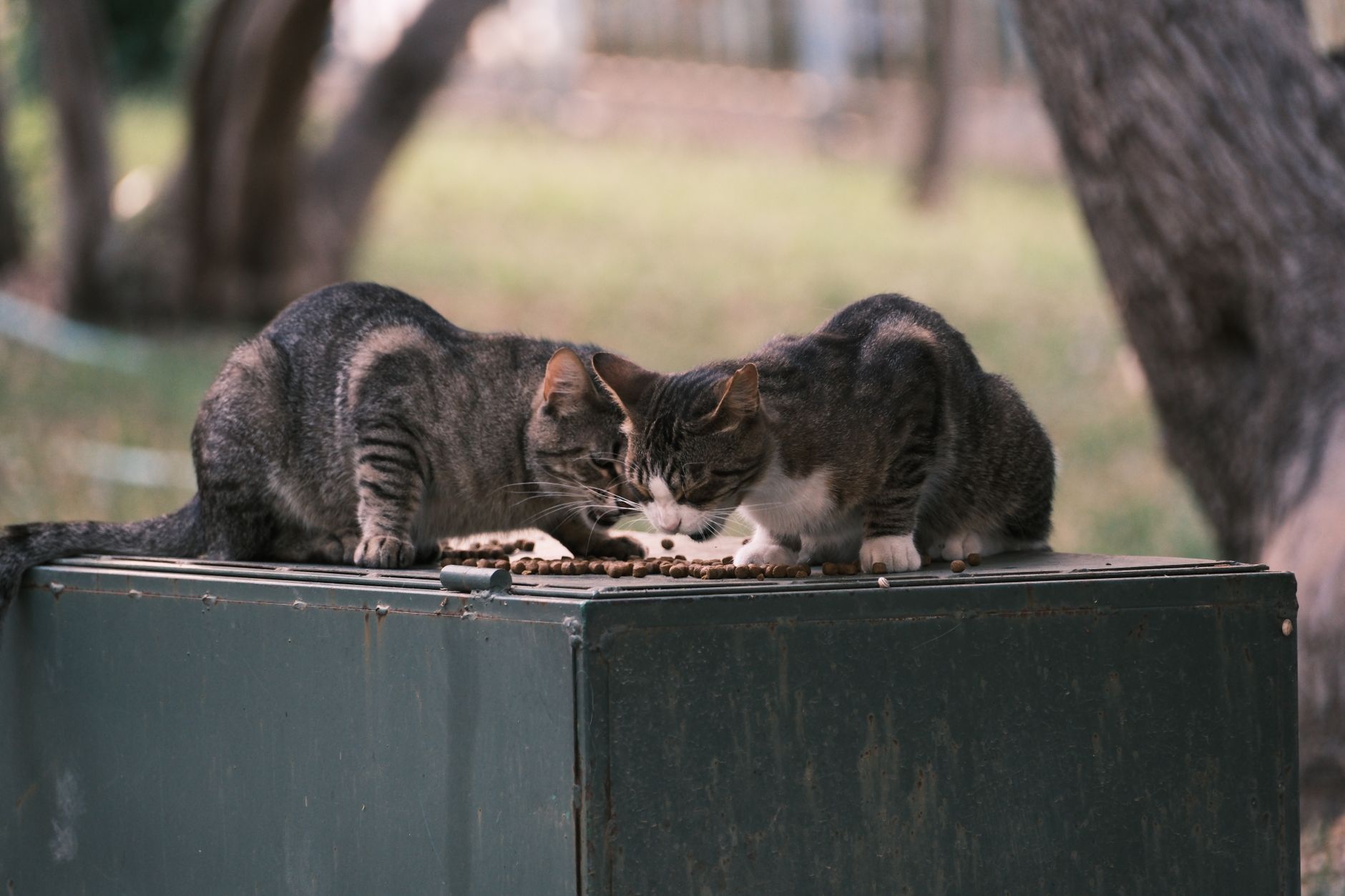
Hello, it’s Sachat. Have you just adopted a little ball of fluff that wails like a siren at 5 in the morning? Congratulations, you are officially the automatic kibble dispenser of this tiny predator. And believe me, its tummy’s needs are going to change every few weeks. Feeding a kitten isn’t like feeding an adult cat in smaller portions: it’s an evolving programme, almost month by month. I’ll explain it all, from the first drops of milk through to the transition into adulthood, with no jargon and without drowning you in theories.
From 0 to 4 weeks: it all comes through milk
At birth, the kitten knows only one thing: its mother’s milk. And that milk is liquid gold. It contains the colostrum of the first few days, packed with antibodies that protect the little one while its own immune system wakes up. If mum is around, your job comes down to feeding her, generously, with a good rich wet food so she produces enough.
If you find yourself with an orphan (it happens), never improvise with cow’s milk: it causes diarrhoea and dehydration. You need a special kitten milk replacer, from the chemist or the vet, given by bottle every 2 to 3 hours, through the night included. Yes, it’s intense. Weigh the little one every day: a healthy kitten puts on weight every day. If it plateaus, off to the vet without delay.
From 4 to 8 weeks: the big weaning
Around 4 weeks, the first teeth come through and the kitten starts taking an interest in what its mother is eating. This is weaning time, a gentle transition from milk to solids.
How I go about it
Start with a gruel: kitten wet food mashed with a little warm milk replacer, soup-style. At first, it’ll mostly walk in it and get it everywhere (the show is worth the watch, get your phone ready). Bit by bit, reduce the liquid to thicken it. By around 6 to 7 weeks, it should be eating wet food on its own without trouble.
Offer these meals in a proper flat, stable bowl, not too deep so the whiskers don’t touch the sides. A ceramic cat bowl – Amazon is perfect: heavy so it’s impossible to tip over, and easy to clean (believe me, you’ll be cleaning often).
From 2 to 4 months: the age of the big appetites
Now your kitten enters its fastest growth phase. It burns wild amounts of energy: it runs, climbs the curtains, attacks your ankles at midnight. Its diet has to keep up with this rocket pace.
A rich and frequent diet
A kitten doesn’t have the same needs as an adult: it needs far more protein and calories per kilo. You absolutely must choose a food labelled “kitten”, specially formulated for growth. As for the rhythm, its little tummy can’t store it all at once: reckon on 4 meals a day at this age, spread across the day.
You can go for wet food, kitten kibble, or a mix of the two. Wet food hydrates well (essential in cats, naturally poor drinkers), kibble is handy for free feeding. Good grain-free cat kibble – Amazon rich in animal protein suits very well once the move to solids is complete. On the wet side, a quality Almo Nature kibble – Amazon delights the little gourmets.
From 4 to 6 months: settling into a real routine
Your kitten looks more and more like a mini-cat. It’s had its jabs, perhaps already been neutered depending on your vet’s schedule. This is the time to structure its meals.
You can move to 3 meals a day. Always keep a kitten-specific food, because its growth isn’t over, far from it. If you notice small digestive upsets (soft stools during a change of food, for example), a course of probiotics for cats – Amazon helps balance its gut flora and digest more comfortably. Do still ask your vet’s advice on the doses.
Water on tap, always
Whatever the age, fresh water must be available at all times, in a clean container, away from the litter tray. Refresh it every day. A well-hydrated kitten means kidneys that will thank you later.
From 6 to 12 months: the home straight
Your kitten has become a gangly teenager that eats for four. We stay on kitten food, but we can drop to 2 meals a day around 6 to 8 months, like an adult.
Mind the overweight trap, especially after neutering, which lowers energy needs. Keep an eye on its figure: you should feel its ribs under your fingers without them sticking out, and make out a slight waist from above. Adjust the amounts rather than filling the bowl to the brim out of guilt when it gives you the soppy eyes (a technique it has already mastered perfectly, I can confirm).
A helping hand for the coat
During this growth, a shiny coat is a sign of good health. A few drops of salmon oil for cats – Amazon on its wet food provide omega-3s that are excellent for the skin and coat. Start with very small amounts to get its tummy used to it.
The transition into adulthood (around 12 months)
Around 1 year (a little later for the large breeds like the Maine Coon), your ball of fluff has finished growing. It’s time to switch to an adult cat food. But above all, no abrupt change: its digestive system hates surprises.
Make a transition over 7 to 10 days: mix a little of the new adult food into the old one, gradually increasing the proportion each day. That way you avoid diarrhoea and sulking in front of the bowl. And there you have it, your kitten is officially grown up. You can be proud, you’ve handled the most demanding nutritional programme of its life.
FAQ
Can I give my kitten cow’s milk?
No, definitely not. Most kittens digest the lactose in cow’s milk poorly, which causes diarrhoea and dehydration. If you must supplement a tiny one’s diet, use only a special kitten milk replacer. Once weaned, a kitten has no further need for milk: fresh water is plenty.
How many meals a day for a kitten?
It depends on its age. Around 2 to 4 months, reckon on 4 meals a day. From 4 to 6 months, you can move to 3 meals. From 6 to 8 months, 2 daily meals are generally enough. The idea is to respect its little tummy, which can’t take it all in one go.
Wet food or kibble for my kitten?
Both have their advantages, and the ideal is often to combine them. Wet food provides plenty of water, which is precious because cats drink little naturally. Kibble is handy and helps with dental hygiene. In any case, choose good-quality products formulated for “kittens”, rich in animal protein.
When do I switch my kitten to adult food?
Generally around 12 months, sometimes later for large breeds that grow for longer. The switch should be gentle, over 7 to 10 days, gradually mixing the new food into the old one to avoid digestive trouble.
Purrs, Sachat 🐾