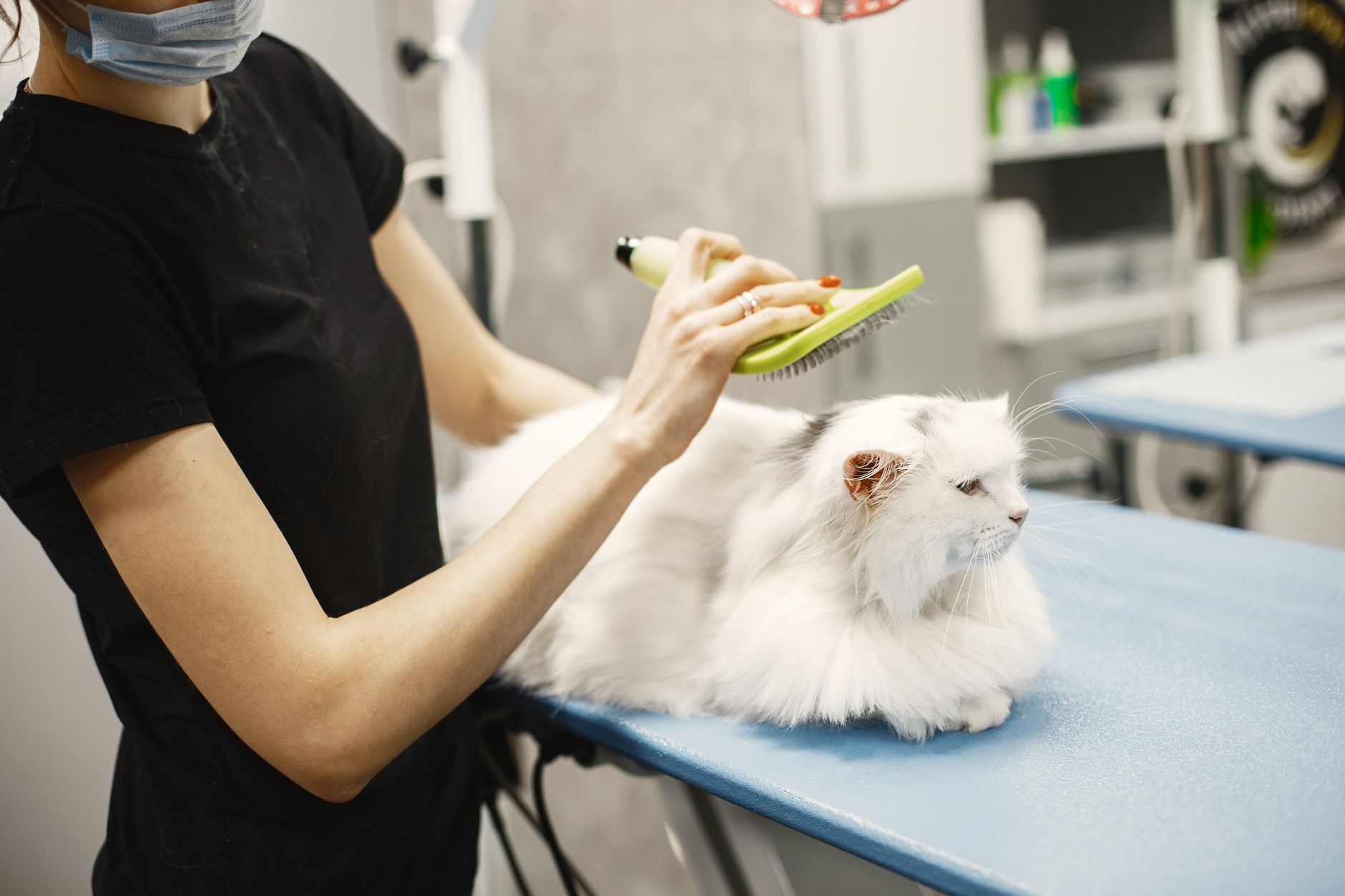
Hi, it’s Sachat. If you are reading this, it is surely because you keep finding fur everywhere: on your black sofa, in your coffee, and even in places where no cat has ever set a paw. Let me reassure you right away: losing fur is my line of work. It is called shedding, and it is as natural for me as waking you at 5am to demand my pâté. But between normal shedding and shedding that should alert you, there is a world of difference. Settle in, I will explain everything.
Losing Fur Is Normal (Up to a Point)
Before you panic and assume I am going to end up bald as a sphynx cat, understand one thing: I renew my coat constantly. The dead hairs fall out to make way for new ones. It is the great cycle of life, feline edition.
Seasonal shedding, my big spring clean
Twice a year, generally in spring and autumn, I shed. In spring, I get rid of my thick winter coat to get ready for summer. In autumn, the reverse. During these periods (which last around 2 to 3 weeks), I lose far more fur than usual. It is intense, but it is healthy.
A modern little detail: we indoor cats live under artificial light and constant heating. As a result, our shedding is often thrown off and we lose fur more or less all year round. It is no big deal, it is just the price of comfort.
When fur loss should alert you
Here, I put on my serious cat hat. Normal fur loss is spread out and even: my coat stays full all over. On the other hand, certain signs should prompt you to see a vet:
- Bald patches (areas of bare skin), especially if they are round or symmetrical.
- Excessive itching: I scratch, lick or nibble myself non-stop.
- Red, crusty skin, with dandruff or spots.
- A dull, greasy or brittle coat that no longer looks like anything.
These symptoms can hide parasites (fleas, ringworm), an allergy, a hormonal imbalance or a skin problem. Only your vet can give a diagnosis and tell you what to do. Never play doctor yourself, you could make things worse.
The Real Causes of Excessive Fur Loss
When I really do lose too much fur, it is often because something is wrong. Here are the usual suspects.
A poor diet
My coat is the mirror of my dinner plate. If I eat low-grade kibble stuffed with grains and short on quality protein, my coat suffers: it turns dull and falls out more. Essential fatty acids (omega 3 and 6) are my best friends for a shiny, well-anchored coat.
Stress, that fur thief
Oh yes, I am a sensitive bundle of nerves. A house move, a new baby, another cat in the neighbourhood, and there it is, I start licking myself compulsively (it is called overgrooming alopecia). The result: sparse patches, often on the belly or the legs. Calming my environment then becomes the priority.
Parasites and health worries
Fleas are the number one cause of scratching and fur loss. But other problems (allergies, hormonal disorders, deficiencies) come into play too. Once again: doubt equals vet.
Brushing, My Secret Weapon Against Fur Everywhere
Want THE most effective solution for cutting down the fur in your home? Brushing. It is simple, free (once you have bought the tool) and life-changing. Every dead hair you remove with a brush is a hair that will not end up on your black jumper.
How often to brush me
If I am short-haired, brushing 2 to 3 times a week is enough in normal times, and every day during shedding season. If I am long-haired (a Maine Coon or Persian, say), daily brushing is compulsory, otherwise I turn into a bag of knots.
For daily brushing, a good cat brush – Amazon works wonders: it catches the dead hairs from the undercoat before they fall out. And between you and me, I love it, it is like a massage session.
Long fur and knots
If I am long-haired, knots are my sworn enemy. A knot tugs at my skin, it hurts, and it can hide problems underneath. A cat de-matting comb – Amazon lets you untangle gently without ripping out whole tufts. Take it easy, talk to me softly, and stop if I growl.
Feeding the Coat from the Inside
Brushing removes the dead hairs, but for a strong coat that sheds less, it is decided in the food bowl. A beautiful coat starts with a good diet.
Omega 3, my shine allies
Omega 3 fatty acids are essential for the health of my skin and the beauty of my coat. They nourish the coat at the root, make it shinier and reduce dandruff. A course of cat salmon oil – Amazon added to my pâté is a great classic: a few drops are enough, and it is delicious to boot. Ask your vet’s advice on the dose to suit my weight.
A healthy gut, a healthy coat
We do not think about it enough, but my gut flora plays a part in the quality of my coat and skin. If my digestion is off, so is my coat. A course of cat probiotics – Amazon can help rebalance all of that, particularly after a course of antibiotics or a bout of digestive stress. Here again, the vet’s advice is precious before you get started.
Grooming: Should I Be Washed?
I will be honest: I wash myself perfectly well, thank you. Most of the time, a cat does not need a bath. But in certain cases (very dirty or greasy fur, or on the vet’s recommendation), a bath can help remove dead hairs and dandruff.
If you do have to wash me, forget your shower gel, it is far too harsh for my delicate skin. Use a hypoallergenic cat shampoo – Amazon, gentle and suited to my pH. Rinse very carefully, and dry me well. And above all: a bath stays an exceptional event, not a routine. Washing me too often would, on the contrary, damage my coat.
FAQ
My cat loses fur all year round, is that normal?
For an indoor cat, yes, it is common. Artificial light and heating throw off the seasonal shed, which spreads the fur loss across the whole year. As long as my coat stays full all over, with no bald patch or itching, there is nothing to worry about. Regular brushing is enough to manage it.
How do I know if the fur loss is abnormal?
The warning signs are: areas of bare skin, intense itching, red or crusty skin, dandruff, or a dull and brittle coat. If you notice any of these signs, book a vet appointment. Only the vet can identify the cause (parasites, allergy, hormonal problem) and suggest the right treatment.
What is the best way to reduce fur in the home?
Regular brushing, no question. It is by far the most effective: you remove the dead hairs before they fall everywhere. Pair that with a good diet rich in omega 3, and you will see a real difference in the amount of fur in your home and in the shine of my coat.
Is salmon oil really useful for the coat?
Yes, it is a source of omega 3 that nourishes the skin and coat from the inside. It helps achieve a shinier coat and reduce dandruff. It is not a miracle medicine, but alongside a good diet and regular brushing, it gives lovely results. Check the dose to suit my weight with your vet.
Purrs, Sachat 🐾