Hi, it’s Sachat. See me there, sprawled on the sofa in croissant mode? Don’t be fooled by appearances: behind this peaceful purr hides a mini-predator who needs to run, jump and hunt. Except I live indoors. No mice in the garden, no tree to climb. So if nobody takes care of it, I spend my days sleeping, and there you go: hello, round little belly and mischief at 3am. Today I’ll show you how to get your indoor cat moving, properly, without breaking the bank or turning into a feline fitness coach.
Why an indoor cat absolutely needs to move
In the wild, my cousins spend a good part of their nights hunting, roaming their territory and climbing everywhere. At your place, my territory is 40, 60 or 90 square metres, and the hunt boils down to stalking a fly every three days. The result: if you don’t prompt movement, I go to seed.
A lack of exercise in the indoor cat isn’t just a matter of figure. It leads to excess weight, boredom, stress, and sometimes to tiresome behaviour: clawing the sofa, meowing at night, aggression. A cat who burns off energy is a balanced cat, who sleeps better and eats more calmly.
How much activity a day?
Aim for at least two active play sessions of 10 to 15 minutes a day. It sounds like little, but in intensity it’s plenty for a cat. Morning and evening are when I’m naturally at my fittest. Make the most of it, and you’ll have a cat who’s had his fill of movement and is far more relaxed for the rest of the day.
The hunting game, my favourite activity
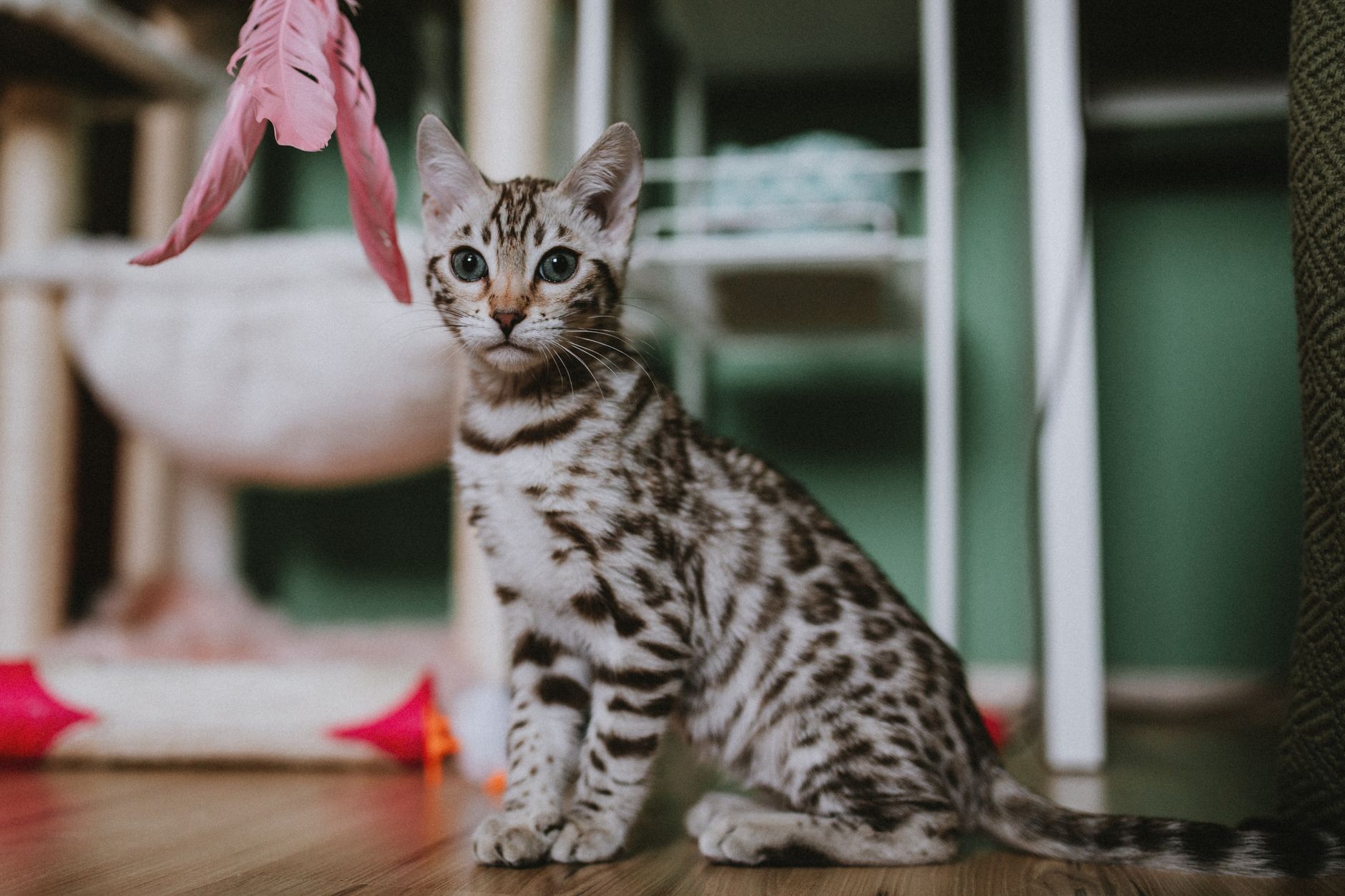
Want a secret? Nothing motivates me more than hunting prey. My brain is wired for it. A feather wand, a string snaking along the floor like a serpent, a small ball rolling: and presto, I become the tiger of the living room again.
The key is to mimic real prey. You move the toy unpredictably, you hide it behind a cushion, you let it dart away, then you let me catch it at the end. That part matters: if I run for ten minutes without ever capturing anything, I end up frustrated. Always finish the session with a real catch, followed by a little treat or my meal. The hunt, catch, eat, sleep cycle is what fulfils me.
For the moments when you’re busy, slip me a natural cat ball – Amazon: I push it, I chase it, I amuse myself on my own. It doesn’t replace playing with you (nothing replaces that, I’m sentimental), but it keeps my paws busy between sessions.
Climb, jump, observe: verticality changes everything
We often forget it, but for a cat, space isn’t measured at floor level alone. I love getting up high. Climbing is a full-body exercise that builds my hind legs and works my balance, and watching my kingdom from above reassures me enormously.
That’s why I warmly recommend a good cat tree – Amazon. With its platforms at different heights, its hiding spots and its scratching posts, it’s my sports ground and my relaxation lounge in a single piece of furniture. Place it near a window: I climb to the top, I watch the birds, and I do my feline press-ups without even realising it.
Create a high-level course
If you want to push it further, set up a little circuit: a shelf here, the back of a chair there, a windowsill, the cat tree. I move from one to the next like a parkour runner, and every jump is exercise. Just check that everything is stable. A shelf that tips over is the fright of my life and a risk of injury.
Working the brain as much as the paws
Moving the body is good. But getting my head working is just as tiring and just as beneficial. Puzzle games count as exercise too, and they stop me getting bored when you’re not there.
The simplest and most effective: the kibble dispenser or snuffle mat. Instead of serving my meal in a bowl (too easy, I gulp it down in 30 seconds), you make me search, scratch and roll it about. I work for my food, exactly like a hunter. You can make a free homemade toy: treats or a few pieces of kibble hidden in a folded toilet roll tube, or in an egg box. I spend a good quarter of an hour exploring, and I’m delighted.
Setting up the home for an active cat
A well-thought-out environment means a cat who moves spontaneously, without you even having to step in. Multiply the points of interest: cardboard hiding spots, perches near windows, toys spread across several rooms rather than a pile in one corner.
Think too about rotating my toys. If you always leave the same ones lying around, I tire of them. Put half away, bring them out a week later, and there, like magic: they’re brand new to my eyes again. It’s a very simple trick but it reignites my desire to play.
And safe access to the outdoors?
If you have a balcony, securing it can give me extra space to observe and be active, with fresh air as a bonus. A good balcony protection net – Amazon lets me enjoy the smells and movements of the street in complete safety. I can follow a bird with my eyes, stretch out in the sun, sniff the wind: all little stimulations that pull me out of the living-room routine.
The traps to avoid when getting your cat moving
Watch out for some classic mistakes. First, the laser pointer on its own: it makes me run, yes, but since I never catch anything, it frustrates me enormously. If you use it, always finish by letting me capture a real, tangible toy.
Second, never force me. If I don’t feel like playing at a given moment, that’s my right as a cat. Instead, watch for my energy peaks and adapt. Third, beware of weight that’s already set in: if I’m frankly round or if I tire very quickly, talk to my vet before imposing a programme on me. Only they can judge my state of health and set me a pace with no risk to my heart and joints.
FAQ
How do you get a lazy indoor cat moving?
Start with very short sessions, 5 minutes, using a toy that mimics prey (feather wand, string). Play just before his meals, when his hunting motivation is at its peak. Gradually increase the duration. Consistency counts more than intensity: a little every day beats one big session once a week.
How much play time a day for a cat?
Aim for two to three sessions of 10 to 15 minutes of active play daily. Morning and evening are ideal, as these are the times when a cat is naturally most alert. The goal is to make him run, jump and hunt, not just to distract him half-heartedly.
My indoor cat is gaining weight, what should I do?
Combine more daily activity with control over the diet. Use a food dispenser or a snuffle mat to slow down meals and make him work. But before any diet, consult your vet: excess weight can hide a health problem, and only a professional can set a weight goal and a suitable pace.
Is a cat tree enough for exercise?
It’s an excellent foundation, because it pushes the cat to climb, jump and scratch spontaneously. But it doesn’t replace interactive play with you, which triggers the real hunting behaviour. The ideal: a cat tree well placed near a window, plus active play sessions every day.
Purrs, Sachat 🐾