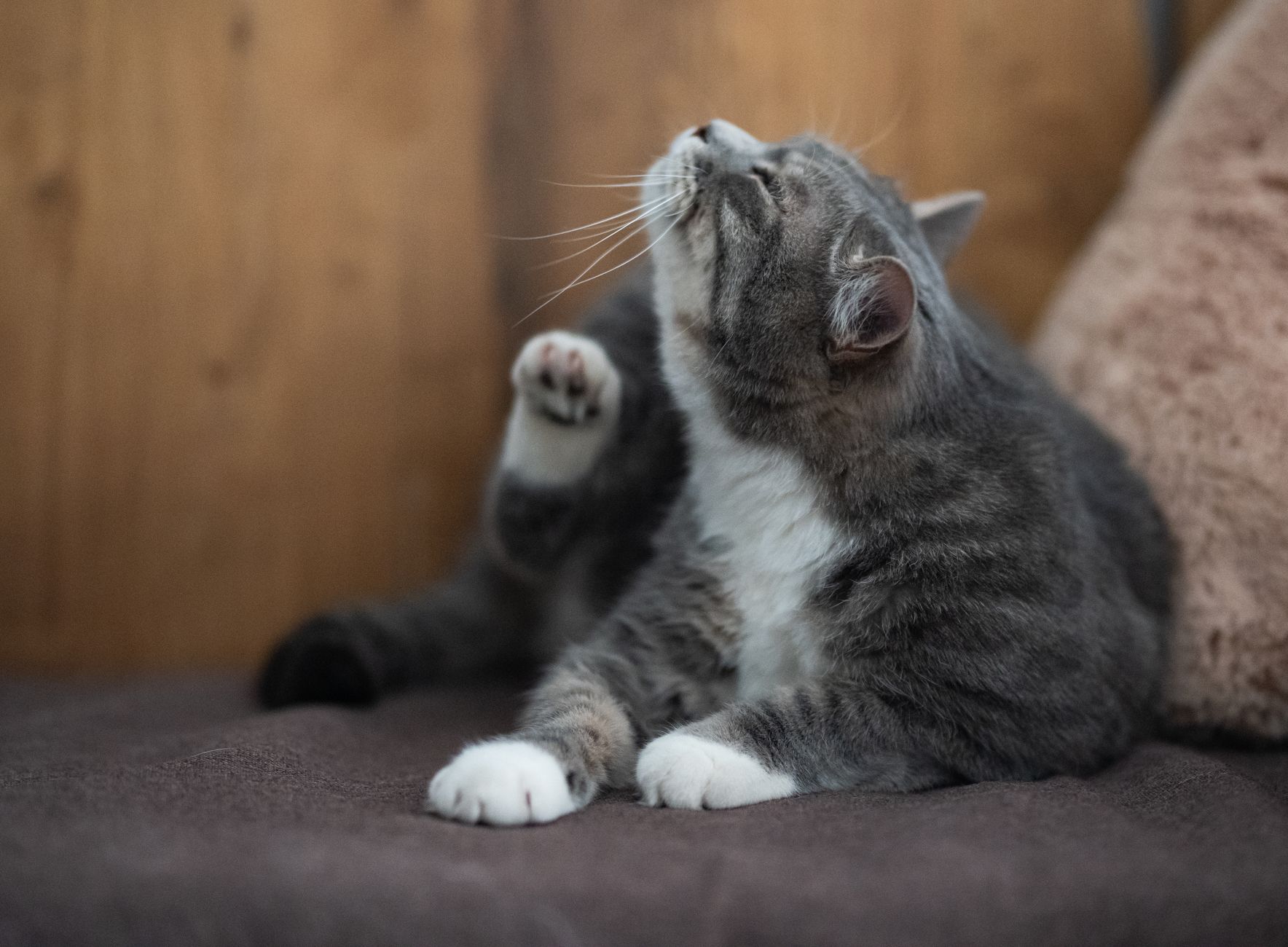
Hello, it’s Sachat! Want me to let you in on something? Summer, I adore it. The open window, the square of sunshine on the floorboards, the garden smells drifting up to my whiskers. But there’s one guest I never invite who barges in anyway: the flea. This tiny six-legged vampire loves the heat, and the moment the mercury climbs, it’s party time for them. If you’ve ever seen me scratch like a thing possessed in the middle of July, you know what I’m talking about. Come on, let me explain everything my human has learnt to keep me calm and comfortable all summer long.
Why summer is the prime flea season
The flea is a little beast that runs on heat and humidity. Its life cycle speeds up sharply when it’s between 20 and 30 degrees. The upshot: in summer, a single flea that lands on my back can lay dozens of eggs a day, and those eggs fall everywhere around the house. Under the sofa, in the carpet fibres, at the bottom of my basket. That’s the trap: you see three fleas on the cat, but they’re only a tiny part of the population. The bulk of the troop is hiding in your home, snug and sheltered.
And even if I never set a paw outside, I’m not safe for all that. Fleas hitch a ride on your shoes, on the bottom of your trousers, on the neighbour’s dog who pops round to say hello. In summer, they have a thousand chances to cross your threshold. That’s why prevention counts as much as treatment.
The signs that should alert you
Before it gets out of hand, learn to spot the first clues. If you see me scratching more than usual, nibbling at the base of my tail or losing fur in patches, be wary. The telltale sign is what your vet calls flea dirt: little black specks in my coat, like pepper. Place them on a damp cotton pad: if they turn reddish-brown, that’s digested blood, so fleas. Not very appetising, but jolly useful to know.
The flea comb, your best daily ally
If you were to remember just one habit, it would be this one. The fine comb is the simplest and cheapest weapon for detecting and removing live fleas from my coat. Its very tight teeth catch the beasties and their dirt that your fingers can’t even feel.
My human runs a fine de-tangling comb for cats – Amazon through me three to four times a week in summer, outdoors for preference, with a bowl of soapy water alongside. Each flea caught plunges straight into the water, and hey presto, no more worry. It’s also a lovely moment of closeness: I purr, he inspects, everyone’s happy. Bonus: this regular pass lets you catch an infestation at the very start, before it becomes a nightmare.
Diatomaceous earth, a natural helping paw
Here’s the star ingredient for humans who love the natural route. Food-grade diatomaceous earth – Amazon is a powder made from fossilised micro-algae. Under the microscope, its particles are as sharp as glass to insects: they damage the fleas’ shell and dehydrate them. For us mammals, used properly, it stays gentle.
My human never puts any directly on my muzzle (I might breathe it in). Instead he sprinkles it on my basket, the nooks of the carpet, the bottom of the skirting boards, lets it work for a few hours, then vacuums thoroughly. It’s devastating against fleas hidden in the house. One golden rule: always choose the food-grade version, never the swimming-pool kind, and apply it on a thoroughly dry surface, because moisture cancels out its effect.
Important: the natural route complements, it doesn’t replace
I’m going to be very clear with you, because it matters. Diatomaceous earth, the comb, the natural shampoo: all of these are excellent tools for prevention and support. But if I’m truly infested, with fleas everywhere and irritated skin, they won’t be enough. In that case, you need a genuine parasite treatment prescribed by your vet, spot-on or tablet depending on the case. The natural route supports, the medical route treats. Never gamble with your cat’s health: at the slightest doubt about an established infestation, head to the vet, full stop.
The natural bath to soothe irritated skin
Let’s be honest: most of us hate water. Me first. But when fleas have left my skin red and itchy, a gentle bath can genuinely soothe me. The idea isn’t to turn me into a sponge, but to clean gently without roughing up my already fragile coat.
My human uses a natural shampoo for cats – Amazon free of harsh products, with lukewarm water, massaging gently and absolutely avoiding my eyes and ears. The rinse has to be spotless. A good natural shampoo soothes the redness and helps dislodge the dirt clinging to the fur. Be careful all the same: a shampoo on its own doesn’t kill an infestation, and some cats can’t stand the bath. If I struggle too much or my skin is very damaged, ask your vet for advice rather than forcing it.
Keep the home under control
I told you: the real battlefield is your home. To win against fleas in summer, think house as much as cat. Wash my bedding at 60 degrees once a week, that’s the temperature that kills eggs and larvae. Vacuum very regularly, especially in the dark corners, under the furniture and along the skirting boards, then throw out the bag or empty the canister straight away outside.
Air the place, let the light in, hunt down the damp: fleas love warm, confined spots. And don’t forget the textiles you always forget, like the sofa cushions or the car blanket if I travel with you. A clean, bright home is already half the battle won.
FAQ
My cat never goes out, can they still get fleas?
Yes, absolutely. Fleas come in on your clothes, your shoes, or via another passing animal. A strictly indoor cat can perfectly well catch them, especially in summer when they’re swarming. Prevention stays useful even for stay-at-homes like me.
Is diatomaceous earth dangerous for my cat?
Used correctly, in the food-grade version and without anyone breathing in the cloud, it’s considered safe. Never apply it near the muzzle and avoid your cat inhaling it during application. If in doubt, ask your vet for advice before using it.
Are natural solutions enough against fleas?
For prevention and light support, yes, they help a great deal. But in the case of a real infestation, they don’t replace a veterinary parasite treatment. The natural route complements the medical treatment, it doesn’t stand in for it. At the slightest doubt, consult the vet.
How often should I comb my cat in summer?
Three to four times a week is a good rhythm at the height of flea season. If you spot beasties or flea dirt, switch to daily combing while you regain control, and keep a close eye on their skin.
Purrs, Sachat 🐾